
Family: Bignoniaceae
Synonyms: Bignonia indica, Calosanthes indica.
Common Name: Kampong
Local Name: Arlu (अरलू), Shyonak
Arlu is a fast-growing, deciduous tree of Western Himalayas that thrives at elevations between 500 to 1200 meters above sea level. It is commonly found in forest margins, roadsides, and open woodlands, where the climate is warm and the soil is well-drained. The tree produces long, curved fruits that hang from its bare branches, resembling the wings of a large bird or dangling sickles, earning it the common name “tree of Damocles.” Due to this, tree of Arlu often seen growing singly or in small groups, rarely forming dense communities. Thus it is often seen in scattered patches, due to its anemophilous seed dispersal method. As it prefers warm areas so mostly thrive in the plains and foothills of the region. In high-altitude zones, its fruits are worshipped by the Kinnauri and Buddhist tribes, and its seeds are integral to the making of Kinnauri caps, giving the plant significant commercial value.

Almost all above-ground parts of O. indicum are edible. The seeds are a key ingredient in “Chyavanprash,” a well-known Ayurvedic food tonic 1,2. The dried powdered seeds are often consumed with milk as a tonic or used to prepare a refreshing drink. Roasted seeds make an excellent addition to local sweet dishes. Additionally, the tender shoots and young fruits are used as vegetables, showcasing the versatile culinary applications of this plant.
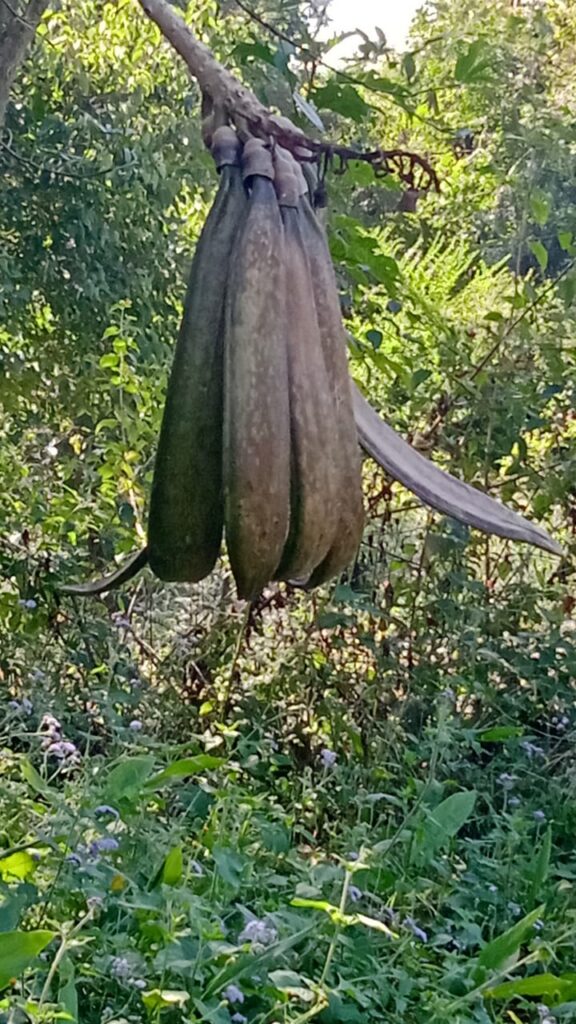
Arlu is a highly valuable multipurpose plant with a wide range of uses, it is harvested from the wild as a source of food, fodder, medicine and material for personal and commercial purpose. However, its full potential remains underutilized in many parts of Western Himalayas. On one hand, the situation is such that those who understand its medicinal, cultural, and economic significance are exploiting it excessively and unsustainably. In particular, the large-scale collection of its seeds and fruits is adversely affecting its natural regeneration.

On the other hand, a large section of society still considers this plant to be insignificant and remains completely unaware of its uses. This imbalance has not only reduced its natural population but has also raised a question mark over its sustainable utilization.
An Untouched Treasure of Economic Opportunities
The fruits and seeds of Arlu are sold in the market for ₹150 to ₹300/ fruit, while its roots and bark fetch a good price in the medicinal market. If its scientific and commercial cultivation is promoted, it has the potential to become an important side crop 2.
Its roots are used in significant Ayurvedic formulations like “Dashamoola,” which could create a massive market for it in the pharmaceutical and herbal industries at both the national and international levels. Furthermore, there are immense possibilities for international export through the value addition and processing of its seeds.

At present traditional knowledge surrounding its medicinal, cultural, and commercial benefits is rapidly declining, particularly among the younger generation, putting the plant at risk of extinction. Given its significance, there is an urgent need for the domestication and large-scale cultivation of arlu in forests or other natural habitats.
Arlu Plant:
Arlu is a short-lived, deciduous tree, up to 8 meters tall.
Branches slender, straight and features large, opposite leaves that can reach 1-2 meters in length.
Leaves are pinnate, with opposite pinnae, and a stout, cylindrical rachis. The leaflets are stalked, broadly ovate or elliptic, measuring 7-14.5 cm long, acuminate, entire, and glabrous.

Flowers numerous, large, fleshy, dull-purple arranged in erect, stout, terminal racemes, emitting a characteristic fetid odour. The calyx is leathery, oblong-campanulate, while the corolla is fleshy and campanulate, ranging from 5-7 cm in length, with irregularly toothed lobes. The flowers have five stamens, one of which is shorter than the others.
Fruit is a woody, red-brown capsule, septicidal dehiscent with two valves, measuring 40-70 cm by 5-8 cm.
Seeds are winged all around, except at the base, allowing for efficient dispersal
The seeds of Arlu are best harvested during February and March, just before the mature pods naturally dry and split open. Edible leaves are best harvested in rainy season as new growth. As seeds are means of regeneration they need to be sustainably harvested either by habitat rotation or keeping some parts on parent plant. However, unsustainable harvesting practices have drastically reduced the natural population of this valuable plant. This underscores the urgent need for raising awareness about sustainable harvesting practices and promoting the domestication.

Edible Uses:
Arlu is an important traditional edible plant whose young leaves, tender shoots, flowers, flower buds, and young capsules are widely consumed in different regions of India. The tender leaves and shoots are commonly used as leafy vegetables and are prepared in the form of pakoras, paranthas, kachru, omelettes, kachoris, and mixed vegetable saag 2.

The flowers are also edible and are utilized for preparing rayata, pakoras, and other traditional dishes after boiling and sautéing with spices. Young flower buds are valued for pickle preparation, while tender capsules are cooked as vegetables and incorporated into sambhar, pulao, pasta, dalia, and oats along with other seasonal vegetables. The plant is appreciated for its unique flavour, nutritional value, and versatility in traditional cuisines, especially among rural and tribal communities where it serves as both food and a component of cultural culinary heritage.

Young Leaves & Tender Shoots Pakoras
Ingredients
Young leaves and tender shoots of arlu, 2 cups (finely chopped); Gram flour (besan), 1 cup; Rice flour, 2 tbsp; Onion, 1 medium (finely chopped); Green chilli, 2 (finely chopped); Coriander leaves, 2 tbsp; Turmeric powder, ½ tsp; Red chilli powder, 1 tsp; Carom seeds (ajwain), ½ tsp; Salt to taste; Water as required; Oil for deep frying.
Method
Mix chopped leaves, onion, green chilli, coriander leaves, and spices in a bowl. Add gram flour and rice flour, then add water gradually to prepare a thick batter. Heat oil in a pan and drop small portions of batter into hot oil. Fry until golden brown and crispy. Serve hot with chutney or tea.
Arlu Leaf Omelette
Ingredients
Tender leaves/shoots, 1 cup (finely chopped); Eggs, 3; Onion, 1 small (chopped); Green chilli, 1; Black pepper powder, ½ tsp; Salt to taste; Oil or butter 1 tbsp.
Method
Beat eggs in a bowl and mix chopped leaves, onion, chilli, salt, and pepper. Heat oil in a frying pan and pour the mixture evenly. Cook on both sides until golden brown. Serve hot with bread or chapati.
Arlu parantha
Ingredients
Tender leaves, 1 cup (finely chopped); Wheat flour, 2 cups; Onion, 1 small (finely chopped); Green chilli, 1; Coriander powder, 1 tsp; Salt – to taste; Ghee or oil for roasting; Water as required.
Method
Mix chopped leaves, onion, chilli, salt, and spices into wheat flour. Add water gradually and knead into soft dough. Prepare balls and roll into paranthas. Roast on a hot tawa using ghee or oil until both sides become golden brown. Serve with curd or pickle.
Urad Dal and Leaf Kachori
Ingredients
For Dough
All-purpose flour (maida), 2 cups; Ghee, 3 tbsp; Salt, ½ tsp; Yeast, ½ tsp; Water as required
For Filling
Soaked urad dal, 1 cup; Tender leaves, 1 cup (finely chopped); Cumin seeds, 1 tsp; Fennel seeds, ½ tsp; Red chilli powder, 1 tsp; Garam masala, ½ tsp; Salt to taste; Oil for frying.
Method
Prepare dough by mixing flour, salt, yeast, and ghee. Add water gradually and knead into a firm dough. Keep aside for 30 minutes. Grind soaked urad dal coarsely and mix with chopped leaves and spices. Make small dough balls, stuff with filling, seal edges, and flatten gently. Deep fry on medium flame until crispy and golden brown. Serve hot with chutney or potato curry.

Mixed Leafy Vegetable Saag
Ingredients
Tender leaves/shoots of Arlu, 2 cups; Spinach or other edible greens, 2 cups; Onion, 1 medium; Garlic, 5 cloves; Green chilli, 2; Mustard oil or ghee, 2 tbsp; Salt to taste; Turmeric powder, ½ tsp.
Method
Wash and boil all greens until soft. Grind coarsely if desired. Heat oil, sauté onion, garlic, and chilli, then add spices and boiled greens. Cook for 10–15 minutes on low flame. Serve with makki ki roti or rice.
Arlu Flower Rayata
Ingredients
Fresh flowers, 1 cup; Curd, 2 cups; Onion, 1 small (finely chopped); Cumin powder, ½ tsp; Black salt, ½ tsp; Green chilli, 1; Mustard oil, 1 tsp; Salt to taste
Method
Boil flowers for 5–7 minutes and drain excess water. Heat oil and sauté onion and chilli, then add flowers and spices. Allow the mixture to cool and mix into curd. Serve chilled as a refreshing side dish.
Flower Pakoras
Ingredients
Fresh flowers, 2 cups; Gram flour, 1 cup; Rice flour, 2 tbsp; Turmeric powder – ½ tsp; Red chilli powder, 1 tsp; Salt to taste; Water as required; Oil – for frying
Method
Prepare thick batter using gram flour, spices, and water. Dip flowers into the batter and deep fry until crisp and golden brown. Serve hot with mint chutney.
Pickle of Arlu Flower Buds
Ingredients
Young flower buds, 500 g; Mustard oil, 1 cup; Mustard seeds, 2 tbsp; Fennel seeds, 1 tbsp; Fenugreek seeds, 1 tsp; Turmeric powder, 1 tsp; Red chilli powder, 2 tsp; Salt, 2 tbsp; Lemon juice or vinegar, ½ cup
Method
Boil flower buds lightly and sun-dry them for one day. Mix all spices and mustard oil thoroughly with buds. Add lemon juice or vinegar and store in a clean glass jar. Keep in sunlight for 4–5 days before use.
Young Capsule Sambhar
Ingredients
Young capsules/fruits, 1 cup (chopped); Masoor dal, ½ cup; Tamarind pulp, 2 tbsp; Onion, 1 medium; Tomato, 1; Sambhar powder, 1 tbsp; Turmeric powder, ½ tsp; Mustard seeds, ½ tsp; Curry leaves, few; Oil, 1 tbsp; Salt to taste
Method
Boil dal and chopped fruits together until soft. Heat oil and add mustard seeds, curry leaves, onion, and tomato. Add sambhar powder and turmeric. Mix boiled dal and fruits, then add tamarind pulp. Simmer for 10 minutes and serve hot with rice.
Seek Professional advice before treating this plant medicinally .
Medicinal significance:
Arlu is renowned for its ethnopharmacological, phytochemical, and pharmacological properties, making it effective in treating a wide range of ailments. The plant is traditionally used as an antipyretic, anti-inflammatory, analgesic, and anti-diarrheal agent, thanks to its rich content of phytochemicals such as flavonoids, alkaloids, steroids, terpenoids, and phenolic compounds. Key phytochemicals in Arlu include baicalein, chrysin, oroxylin A, baicalin, oroxindin, oroxylin B, and sitosterol. These compounds have been shown to exhibit various pharmacological activities, including anti-inflammatory, antioxidant, hepatoprotective, antimicrobial, anticancer, antidiabetic, and antitumor effects 1,2,3,4. Locally, a decoction of the bark of Arlu is considered a stomachic and is used to treat conditions such as vomiting, diarrhoea, and dysentery. The dried bark powder is also consumed as a tonic by some knowledgeable individuals for its rejuvenating and medicinal properties. The root and bark are important ingredients in many commonly used Ayurvedic preparations such as Dasamula, Amartarista, Dantyadyarista, Narayana Taila, Dhanawantara Ghrita, Brahma Rasayana, Chyavanaprasa Awaleha, and others 5,6,7. The composition of drugs like Chyavanprasha and mental tonics includes various parts of Arlu 8,9. The leaves and bark of Arlu are commonly administered along with feed to cattle to help cure swelling.
Cultural Significance:
The lightweight, papery seeds of arlu are strung together to prepare garlands and offerings to gods and goddesses, particularly in Buddhist traditions. In the Kinnaur district of Himachal Pradesh, India, the seeds have traditionally been used to adorn Kinnauri caps, religious articles and other ornamental objects. Traditionally they believed to offer protection against evil and misfortune. Consequently, they form an integral part of various religious ceremonies, cultural traditions and festivals. Traditionally, pods collected from lower-altitude regions such as Mandi and Bilaspur were transported through local trade networks to Kinnaur, Kullu, Lahaul and other adjoining regions, reflecting the historical exchange of natural resources and traditional craftsmanship across the Himalayas2.

Economic significance:
Although various parts of arlu have commercial significance and are widely used in Ayurvedic preparations, its mature fruits are the primary source of income for many. These fruits are initially purchased by local traders and Kinnauri traders at relatively low prices and later sold in Kinnaur during fairs and festivals for a much higher price, ranging from Rs 150 to Rs 300, depending on the size of the fruit2. A field study around Rewalsar and adjoining areas of Mnadi Himachal Pradesh brings out another interesting dimension of this trade. The value of Arlu pods sold for religious purposes is not fixed throughout the year; their price varies from Rs 50 to 350 with the season, availability of mature pods and demand for the winged seeds2. Thus, a pod that begins its life on a scattered foothill tree can acquire considerable economic and cultural value once it enters the traditional market. Additionally, the bark and root powder of arlu can fetch up to Rs 50 to Rs 60 per kilogram in the local market, further contributing to the plant’s economic value2.
Other Uses:

Arlu seeds are used as a lining material for traditional hats and in covering umbrellas. The tree is cultivated as an ornamental species because of its unusual appearance, large compound leaves, attractive flowers and distinctive sword-shaped hanging fruits. Its fruits and bark are reported to be used in traditional dyeing and tanning processes, owing to their colouring properties and tannin content. The wood, being soft and lightweight, is traditionally used as fuelwood and has potential applications in the paper and matchstick industries. Additionally, the seeds have been reported to yield non-drying oil with potential applications in the perfume industry 3,10.
References:
- Chopra RN, Nayar SL, Chopra IC. Glossary of Indian Medicinal Plants; National Institute of Science Communication and Information Resources: New Delhi, India, 2002.
- Sen, T.D. & Singh, S. 2026. Indigenous uses and marketing potential of Oroxylum indicum in District Mandi, Himachal Pradesh, North Western Himalayas. IOSR Journal of Environmental Science, Toxicology and Food Technology 20(3), Series I: 96–103. https://doi.org/10.9790/2402-20030196103
- Chaudhary, AK; Singh, V; Chaudhary, A. K (2011). “A Review on the Taxonomy, Ethnobotany, Chemistry and Pharmacology of Oroxylum indicum Vent”. Indian Journal of Pharmaceutical Sciences. 73 (5): 483–490.
- Radhika, L.G., Meena, C.V., Peter, S., Rajesh, K.S. & Rosamma, M.P. 2011. Phytochemical and antimicrobial study of Oroxylum indicum. Ancient Science of Life 30(4): 114–120.
- Balkrishna A. Ayurved Jadi-Booti Rahasya; Divyaprakasan, Divya Yog Mandir Trust: Haridwar, India, 2005, ISBN 81-89235-44-8
- Kumar V, Chaurasia AK, Naglot A, Gopalakrishnan R, Gogoi BJ, Singh L et al. Antioxidant and antimicrobial activities of stem bark extracts of Oroxylum indicum Vent. (Bignoniaceae)– A medicinal plant of northeastern India. South Asian J Exper Biol. 2011;1(3):152-157.
- Anonymous. The Ayurvedic Pharmacopoeia of India, Government of India, Ministry of health and family welfare Department of Indian system of medicine and Homeopathy, New Delhi, India. 1998; 209-210.
- Laupattarakasem P., Houghton P. J., Hoult J. R., Itharat A. An evaluation of the activity related to inflammation of four plants used in Thailand to treat arthritis. J Ethnopharmacol. 2003; 85(2–3): 207–215.
- Gupta R.C., Sharma V., Sharma N., Kumar N., Singh B. In vitro antioxidant activity from leaves of Oroxylum indicum (L.)(Vent.)-A north Indian highly threatened and vulnerable medicinal plant. J Pharm Res. 2008; 1(1): 65-72. http://en.wik
- Harminder, Singh, V. & Chaudhary, A.K. 2011. A review on the taxonomy, ethnobotany, chemistry and pharmacology of Oroxylum indicum Vent. Indian Journal of Pharmaceutical Sciences 73(5): 483–490. https://doi.org/10.4103/0250-474X.98981