
Family: Sapotaceae
Synonym: Mimusops kauki, Mimusops indica, Mimusops littoralis, Mimusops parviflora, Bumelia elengi.
Common Name: Bakul, Bullet Wood, Spanish Cherry, Indian Medlar.
Local Name: Molshree (मौलश्री)
Molshree is a medium-sized, long-lived evergreen tree reaching 10–15 meters in height, with attractive yellow to orange-red edible fruits. It is a culturally revered evergreen tree of the family Sapotaceae, deeply embedded in India’s traditional knowledge systems. It is also known as Bakul or Maulsari, Celebrated in classical Ayurvedic texts and cherished in rural food traditions, this tree represents a harmonious blend of nutrition, medicine, and spirituality. Every part of Molshree—its bark, fragrant flowers, nutritious fruits, seeds, and leaves—holds immense ethnobotanical significance, reflecting centuries of indigenous wisdom1,2,3.
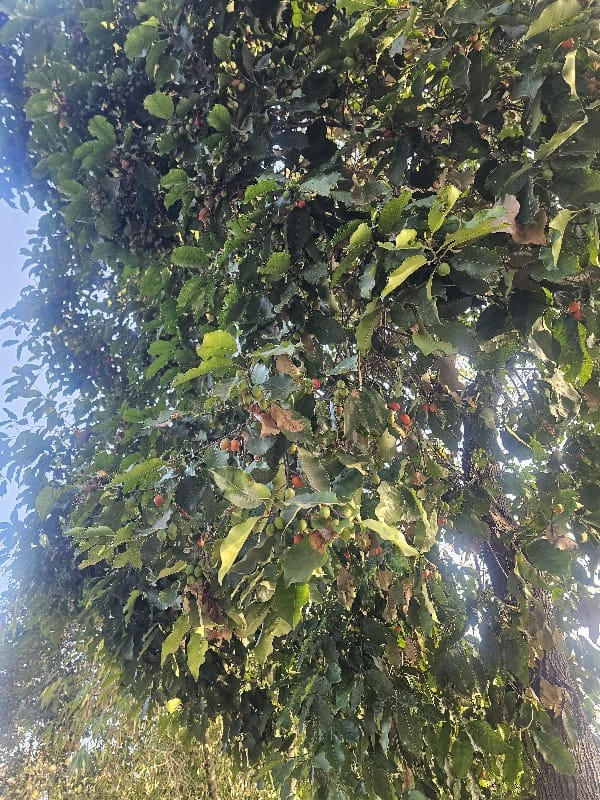
Native to India, it thrives in tropical and subtropical climates, particularly in evergreen and semi-evergreen forests of Western Himalayas. While it naturally occurs up to about 600 meters altitude, it can be successfully cultivated up to 800–1000 meters under favourable conditions. Beyond forests, it is commonly seen adorning temple premises, gardens, and roadside plantations, symbolizing both ecological and cultural richness.
In its natural habitat, Molshree regenerates primarily through seeds, with the best germination observed from fully ripe yellow fruits. It can also be propagated vegetatively through cuttings and grafting. The fruits, relished when ripe, are not only eaten raw but are also traditionally used in chutneys, refreshing drinks, and preserves. Historically, these fruits formed an important part of forest-based diets, consumed by sages and rural communities as a seasonal delicacy—highlighting the tree’s enduring role as both a source of nourishment and a symbol of sustainable living 4.
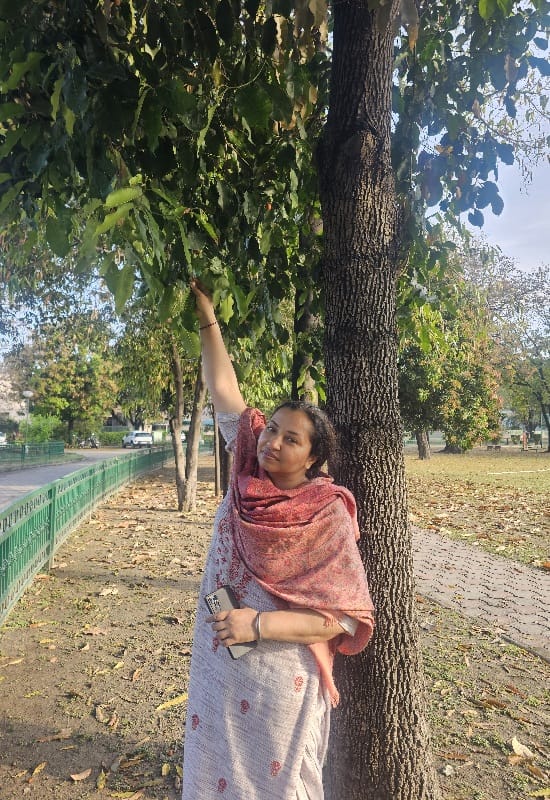
Molshree Plant:
A medium-sized, evergreen tree, 10–15 m tall, with a dense, rounded crown. Bark dark grey to blackish, rough, exfoliating in thin scales. Branchlets slender, glabrous.
Leaves simple, alternate, coriaceous, elliptic-oblong to obovate (5–14 × 2–6 cm), apex obtuse to shortly acuminate, base cuneate; margins entire; upper surface dark green and glossy, lower paler; petiole short (1–2 cm).
Flowers axillary, solitary or in small clusters, bisexual, highly fragrant, white to cream; pedicels short. Calyx 8-lobed in two whorls; corolla tubular with 8 lobes and alternating staminodes; stamens 8, inserted on corolla tube; ovary superior, 1–2 celled.
Fruit a berry, ovoid to ellipsoid (2–3 cm), smooth, turning yellow to orange-red on ripening; pulp sweet and edible.
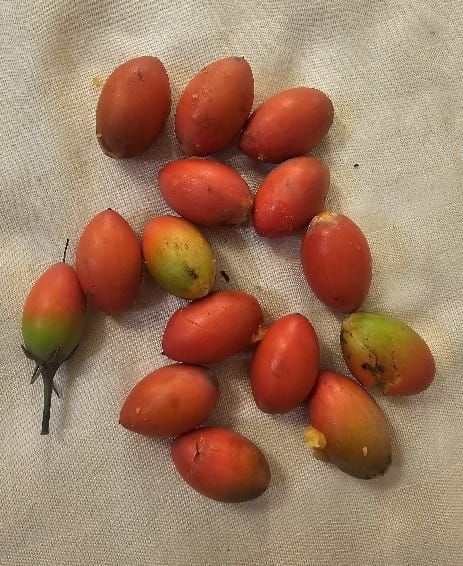
Seeds 1 (rarely 2), oblong, hard, glossy brown.
Ripe Fruits are available from early summer to early monsoon, often eaten fresh by local communities. Historically, these fruits were an important dietary component, though now underutilized. As fruits are the means of dispersal they need to be sustainably harvested to ensure sustainability.
Edible Uses:
Chutney
Ingredients:
Fruit pulp, 100 g; Mint leaves, 20 g; Green chili, 5 g; Salt, 3 g; Lemon juice, 10 ml; Water, 20 ml
Method:
Grind into fine paste and serve fresh.
Fruit Jam
Ingredients:
Fruit pulp, 200 g; Sugar, 150 g; Lemon juice – 15 ml
Method: Cook pulp with sugar till thick; add lemon juice and store.
Dried Fruits
Ingredients:
Whole fruits – 500 g
Method:
Sun-dry for 3–5 days; store and use as snack.
Fruit Herbal Drink
Ingredients:
Fruit pulp, 100 g; Water, 400 ml; Honey, 20 g.
Method:
Blend, strain, and serve.
Nutritional Value:
The fruits of Molshree serve as a moderate energy source, containing approximately 70–85 kcal per 100 g, largely due to 16–20 g carbohydrates. They also provide small but significant amounts of protein (0.5–1.2 g) and fat (0.3–0.6 g). The presence of dietary fiber (2–4 g) supports digestion, while minerals such as calcium (40–80 mg) and iron (1–2 mg) contribute to nutritional well-being. Additionally, the fruits contain vitamin C (10–25 mg), offering antioxidant benefits. Their mild astringency, due to tannins, explains their traditional use in treating digestive disorders 5,6,7,8.
Seek Professional advice before treating this plant medicinally.
Medicinal Uses:
Traditionally fruits are used as food and medicine for dysentery and digestion. Interestingly pulp are used a remedy for dysentery while seed powder remedy for constipation. Bark used in tooth powders and gum strengthening. Flowers used in perfumes and medicinal preparations while seeds for dental care 2,3 . Recent studies also proves its medicinal significance due to presence of wide range of bioactive compounds such as triterpenoids (lupeol, oleanolic acid, ursolic acid), flavonoids(quercetin, kaempferol), tannins, saponins, alkaloids, and glycosides. The bark is particularly rich in tannins contributing to its astringent properties, while flowers contain essential oils responsible for their fragrance. Fruits possess sugars, carotenoids, and amino acids, enhancing their nutritional value. These phytochemicals are responsible for its antioxidant, antimicrobial, and anti-inflammatory activities 1,2,3,7 .
Other Uses:
Molshree represents a valuable “lost fruit species” with immense potential for revival in contemporary landscapes. Its hardy and evergreen nature makes it highly suitable for temple plantations, avenue planting, and eco-restoration programs, where it can contribute to both cultural aesthetics and ecological stability. The species can be effectively integrated into agroforestry systems and herbal awareness campaigns, promoting sustainable livelihoods and traditional knowledge.
Its durable hardwood is useful for making small tools and implements, while the seasonal fruits can be revived as a nutritious wild edible, encouraging their inclusion in local diets. Ecologically, Molshree plays a crucial role by supporting birds, bats, and pollinators, thereby enhancing biodiversity. Additionally, its intensely fragrant flowers offer great potential for value-added aromatic products such as natural perfumes, garlands, and herbal formulations, making it a multipurpose tree of both economic and ecological significance.
References:
- Gami, B., & Pathak, S. (2012). Ethnobotanical review of Mimusops elengi L. International Journal of Pharmaceutical & Biological Archives, 3(3), 541–548.
- Kadam, P. V., Yadav, K. N., Deoda, R. S., & Shivatare, R. S. (2012). Ethnobotanical and pharmacological profile of Mimusops elengi L. Journal of Pharmacognosy and Phytochemistry, 1(3), 64–74.
- Food Research International. (2011). Chemistry and medicinal properties of Mimusops elengi (Bakul). Food Research International, 44(7), 1823–1828.
- Indian Forester. (2016). Seed germination and propagation studies of Mimusops elengi L. The Indian Forester, 142(5), 456–460.
- Kirtikar, K. R., & Basu, B. D. (1935). Indian Medicinal Plants (Vol. 2). Dehradun, India: International Book Distributors (Reprint).
- Nadkarni, K. M. (1976). Indian Materia Medica (Vol. 1). Bombay, India: Popular Prakashan.
- CSIR. (2003). The Wealth of India: A Dictionary of Indian Raw Materials and Industrial Products (Vol. 6). New Delhi, India: Council of Scientific and Industrial Research.
- Longvah, T., Ananthan, R., Bhaskarachary, K., & Venkaiah, K. (2017). Indian Food Composition Tables. Hyderabad, India: National Institute of Nutrition (ICMR).
I have read some good stuff here. Certainly worth bookmarking for revisiting. I surprise how much effort you put to make such a fantastic informative website.
What a beautifully comprehensive profile of Molshree! It’s heartening to see such detailed documentation of a culturally significant yet underutilized tree species. The blend of traditional knowledge with modern nutritional analysis is particularly valuable — especially the distinction between using fruit pulp for dysentery versus seed powder for constipation, which highlights the sophisticated understanding embedded in indigenous medicine.
The recipe section is a lovely touch, making the ethnobotanical information immediately actionable for readers. I’m curious whether the fruit’s mild astringency carries through in the chutney and jam preparations, or if the added ingredients help balance it out.