
Family: Cannaceae
Synonyms: Canna achiras, Canna altensteinii, Canna amabilis, Canna ascendens, Canna aurantiaca, Canna aureovittata, Canna barbadica, Canna bidentata, Canna bifida, Canna brasiliensis, Canna carnea, Canna cearensis, Canna chinensis, Canna cinnabarina, Canna coccinea, Canna commutate, Canna compacta, Canna concinna, Canna crocea, Canna densifolia, Canna discolor, Canna edulis, Canna ehrenbergii, Canna elegans, Cannacorus indicus, Cannacorus ovatus, Distemon brasiliensis, Distemon grandis, Xyphostylis lutea.
Common Name: Indian shot
Local Name: Hari darshan(हरि दर्शन)
Hari darshan is a perennial widely naturalized plant of Himalayan region, commonly seen growing near to habitation, temple, gardens, roadsides and moist habitats. It produces clumps of stems 150 – 300cm tall, with large leaves up to 50cm long and 25cm wide. The stems arise from a large, thick and tuber-like edible rhizome. With its large leaves sheathing a central stem, the plant has the appearance somewhat like a small banana plant.
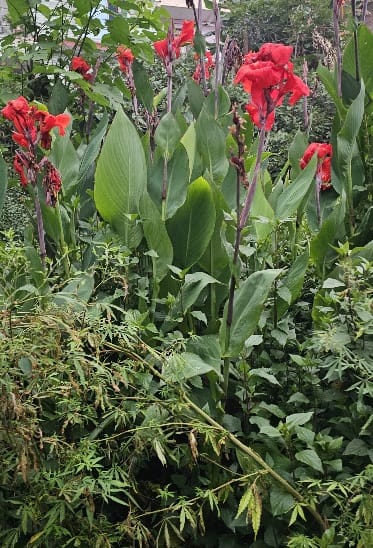
Hari darshan provides food (especially the root), medicines and a range of commodities. But its edible uses are limited. However, this plant is widely grown throughout the Himalayan region as an ornamental, being valued especially for its flowers and attractive leaves. It can grow up to an altitude of 2000m in western Himalayas. Requires a deep rich well-drained soil in a sunny position.
Root sometimes eaten raw, but usually consumed after being cooked in various ways. The very young tubers are eaten cooked, they are sweet but fibrous.
Hari darshan can be propagated either by seeds or rhizome but in Himalayan regions, natural spread is mostly vegetative through rhizomes rather than seeds. That is why patches of this plant are often seen expanding gradually along moist slopes, streamside, and abandoned areas.
The rhizome of Hari darshan is rich in starch and has been traditionally used in various cultures as a carbohydrate source 1 (Tan et al., 2020). Despite its presence, Hari darshan lacks a strongly established culinary identity in Himachal Pradesh, which itself is a telling ethnobotanical observation. Thus although not widely consumed in Himachal, its edibility is well established globally.
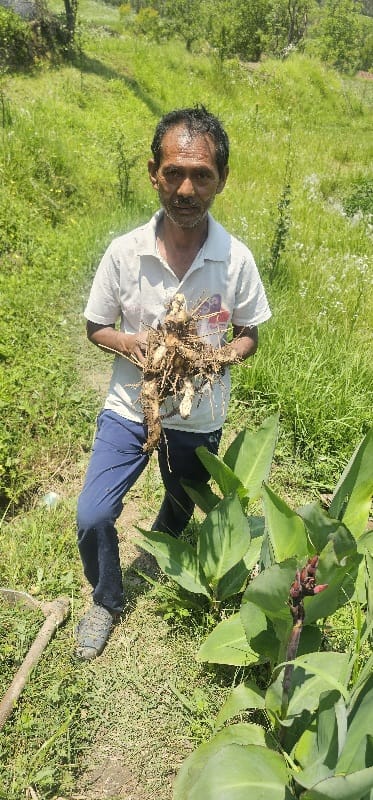
However, Hari Darshan is a multipurpose and climate-resilient plant that can thrives in marginal and moist lands with minimal inputs. It can be utilized as an ornamental, food, fodder, fibre, food wrapping material and in leaf plate preparation. Its seeds can be used for jewellery preparation and as traditional rattles.
Hari darshan Plant:
A robust, perennial, rhizomatous, herbaceous monocot growing 1–3 m tall. It is widely cultivated as an ornamental plant and for its edible, starch-rich rhizomes.Plants typically attain a height of 1–3 m, depending on the cultivar and growing conditions.The root system consists of numerous adventitious, fibrous roots arising from the underground rhizomes.
The true stem is an underground, thick, fleshy, branched rhizome rich in starch. The aerial shoot is an erect, unbranched pseudostem formed by overlapping leaf sheaths.
Leaves are simple, alternate, distichous, large, oblong to elliptic-lanceolate, with entire margins, an acute to acuminate apex, sheathing base, and prominent midrib. They exhibit parallel venation and are bright green to purplish-green.
Flowers are large, showy, bisexual, zygomorphic, and epigynous, borne in terminal racemes or panicles. They occur in shades of red, orange, yellow, pink, cream, and bicoloured forms. The androecium has a single fertile stamen, while the remaining stamens are modified into petaloid staminodes.
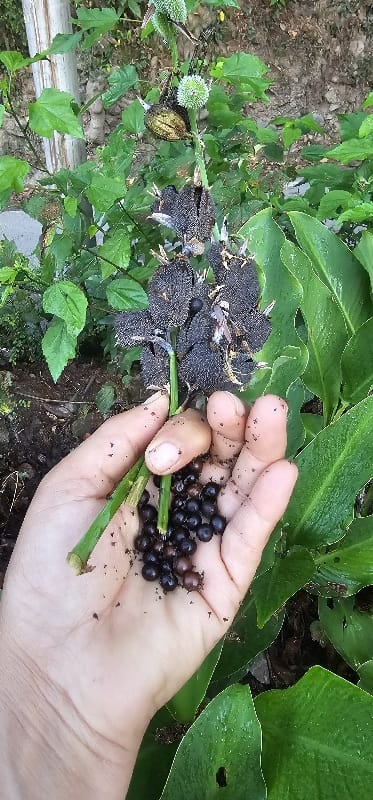
The fruit is a globose to ellipsoid, warty capsule that dehisces at maturity to release numerous seeds.
Seeds are numerous, spherical, hard, smooth, black to dark brown, with a thick, impermeable seed coat that imparts long viability and dormancy.
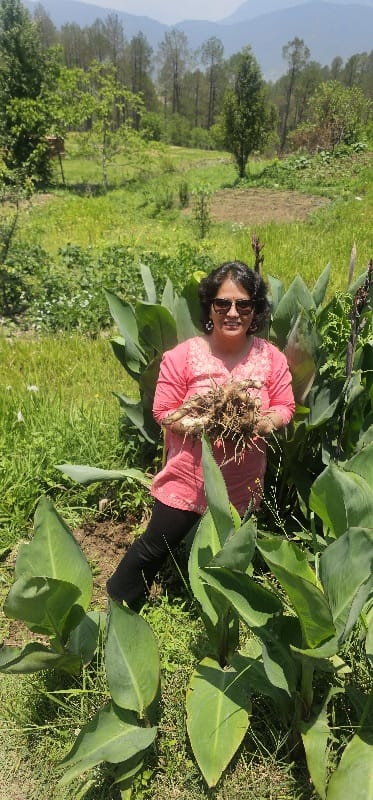
Hari Darshan rhizomes are best harvested during winter, when the plants have reached full maturity and the leaves have turned yellow. At this stage, the rhizomes have accumulated their maximum starch content, making them ideal for food use, starch extraction, and the preparation of value-added products. To ensure sustainable utilization and long-term conservation of natural populations, rhizomes should be harvested using a habitat rotation approach, allowing previously harvested sites sufficient time to regenerate.
Edible Uses:
The rhizomes (underground stems) are rich in starch2. In some areas (especially older generations), they were. Boiled or roasted and eaten during food scarcity. Used as a source of easily digestible starch, similar to arrowroot However, this practice is now rare in Himachal, though more common in tribal and other Asian regions where its starch is highly valued as thickening agent in soup, gravies, sauces. Boiled rhizomes can be an excellent addition to Traditional dishes of Western Himalayas like Siddu, Kachouri and paranthas etc.
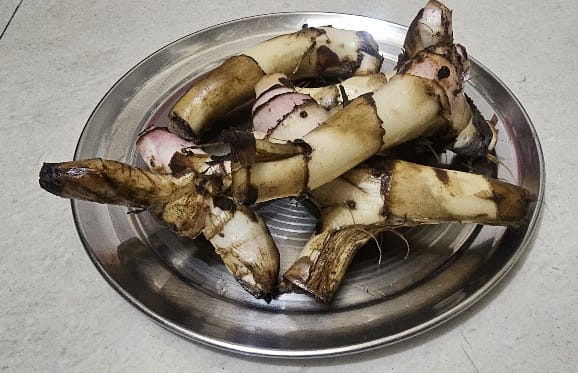
Rhizome Vegetable (Indian-Style Dry Curry)
Ingredients:
Young tender rhizomes, 500 g; mustard oil, 2 tablespoons; cumin seeds, 1 teaspoon; mustard seeds (optional), ½ teaspoon; onion (finely chopped), 1 medium; ginger-garlic paste, 1 teaspoon; green chilies (finely chopped), 2; tomato (finely chopped), 1 medium; turmeric powder, ½ teaspoon; coriander powder, 1 teaspoon; red chilli powder, ½ teaspoon; salt to taste, garam masala, ½ teaspoon; fresh coriander leaves, 2 tablespoons (chopped); and lemon juice, 1 teaspoon (optional).
Method:
Wash the young Hari darshan rhizomes thoroughly, peel off the outer skin, and cut them into thin slices or small cubes. Boil the rhizome pieces in salted water for 15–20 minutes or until they become tender, then drain the excess water. Heat mustard oil in a pan and add cumin and mustard seeds. Once they begin to crackle, add the chopped onion and sauté until golden brown. Stir in the ginger-garlic paste and chopped green chilies, cooking for about one minute. Add the chopped tomato along with turmeric powder, coriander powder, red chilli powder, and salt, and cook until the spices blend well and the oil begins to separate. Add the boiled Hari darshan rhizome pieces and mix gently so that they are evenly coated with the masala. Cook over low heat for 8–10 minutes, stirring occasionally. Finally, sprinkle garam masala, garnish with fresh coriander leaves, and drizzle with lemon juice if desired. Serve hot with chapati, millet roti, or steamed rice.
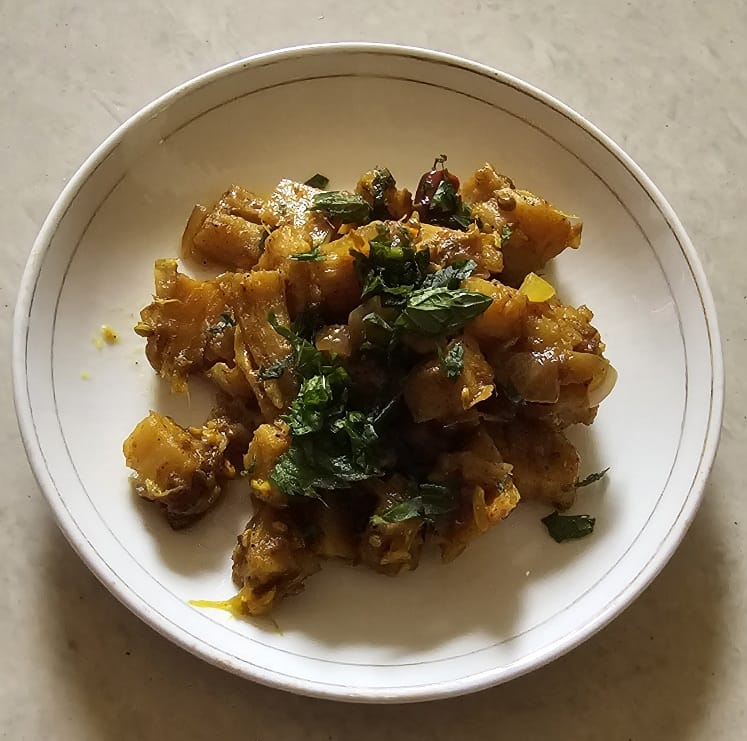
To serve with rice as a vegetable curry add some curd or buttermilk and cook for another 8-10 minutes.
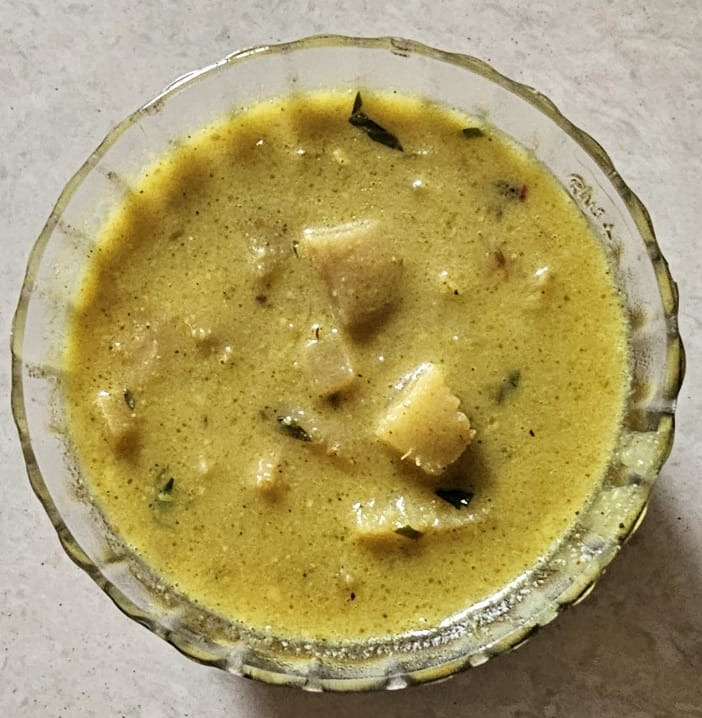
Boiled Hari darshan rhizomes, (Traditional Snack)
Ingredients
Fresh Hari darshan tubers, 250g; Salt (optional); Butter or ghee (optional).
Method
Wash the tubers thoroughly. Boil for 45–60 minutes until soft. Peel the outer skin. Serve warm with salt, butter, or local chutneys.
Roasted Hari darshan rhizomes.
Ingredients
Whole fresh Hari darshan rhizomes,
Method
Roast the tubers over hot charcoal or bake at 180°C for about 45–60 minutes. Peel and eat while warm.
The flavour is mildly sweet and resembles roasted sweet potato.
Kachori with Hari darshan Rhizome
Ingredients:
Young tender Hari darshan rhizomes, 500 g; whole wheat flour (or refined flour), 2 cups; semolina (optional), 2 tablespoons; ghee or oil, 3 tablespoons (for dough); carom seeds (ajwain), ½ teaspoon; salt, 1 teaspoon (divided); mustard oil, 2 tablespoons; cumin seeds, 1 teaspoon; onion (finely chopped), 1 medium; ginger-garlic paste, 1 teaspoon; green chilies (finely chopped), 2; turmeric powder, ½ teaspoon; coriander powder, 1 teaspoon; red chilli powder, ½ teaspoon; roasted cumin powder, ½ teaspoon; dry mango powder (amchur), ½ teaspoon; garam masala, ½ teaspoon; locally available edible herbs , few leaves 5-10( Kalonchoe, Oxalis, Mentha, Euphorbia hirta etc); fresh coriander leaves (chopped), 2 tablespoons; and oil or ghee for deep frying, as required.
Method:
Wash, peel and grate the young tender Hari darshan rhizomes. Blanch them in boiling water for 5–7 minutes, drain thoroughly and gently squeeze out excess moisture. Heat mustard oil in a pan and add cumin seeds. When they splutter, add chopped onion and sauté until light golden. Add ginger-garlic paste and green chilies, and cook for a minute. Mix in the grated Hari darshan rhizome, turmeric powder, coriander powder, red chilli powder, roasted cumin powder, amchur, garam masala, locally available edible herbs ( Kalonchoe, Oxalis, Mentha, Euphorbia hirta etc) and salt. Cook the mixture over medium heat for 6–8 minutes until it becomes dry and aromatic. Stir in chopped fresh coriander leaves and allow the filling to cool completely.
Meanwhile, prepare a stiff dough by mixing whole wheat flour, semolina, carom seeds, salt and ghee with sufficient water. Cover and rest the dough for 20 minutes. Divide the dough into equal-sized balls, flatten each one, place a spoonful of the cooled Hari darshan filling in the centre, gather the edges to seal, and gently flatten into a thick disc. Heat oil or ghee in a deep pan and fry the kachoris over low to medium heat until they turn uniformly golden brown and crisp. Drain on absorbent paper and serve hot with mint chutney, tamarind chutney or curd.
Food Value:
The tubers contain 65–75 g moisture per 100 g fresh weight, making them a good source of hydration. They provide 20–30 g carbohydrates, of which 18–25 g is starch, serving as the primary energy reserve. The protein content ranges from 1.5–3.0 g, while fat is very low (0.2–0.6 g), making the tubers a low-fat food. They also contain 1.0–3.5 g dietary fiber, which supports digestive health, and 0.8–1.5 g ash, indicating the presence of essential minerals. The mineral composition includes 15–40 mg calcium, 30–70 mg phosphorus, 200–450 mg potassium, 0.5–2.0 mg iron, 20–45 mg magnesium, and 5–20 mg sodium per 100 g. In addition, the tubers contain 20–85 mg gallic acid equivalents (GAE) of total phenolic compounds, reflecting their antioxidant potential. The overall energy value ranges from 90–130 kcal per 100 g fresh weight, making them a nutritious source of carbohydrates, minerals, dietary fiber, and bioactive compounds 1,2,3,4 .
Seek Professional advice before treating this plant medicinally.
Medicinal Uses:
The rhizomes are known for their anti-inflammatory, antioxidant, antimicrobial, and wound-healing properties. They are also used in folk medicine to relieve diarrhea, dysentery, fever, urinary disorders, and digestive complaints. Experimental studies have reported hepatoprotective, antidiabetic, and cytotoxic activities, indicating its potential in the management of liver disorders, diabetes, and certain cancers5,6,. These medicinal properties are mainly attributed to the presence of phenolics, flavonoids, tannins, alkaloids, and other bioactive compounds 5,6,7,
Other Uses:
1. Eco-friendly Leaf Wrappers
The large, broad leaves of Hari darshan are traditionally used as natural wrappers for food during cooking, steaming, and serving, particularly in areas where leaves of species such as Ficus auriculata or Phanera vahlii are unavailable. The leaves are biodegradable and promote a sustainable, zero-waste lifestyle by replacing synthetic packaging material 9.
2. Ornamental and Landscaping Plant
Hari darshan is extensively cultivated as an ornamental plant due to its attractive foliage and brightly coloured flowers. It is widely used in gardens, parks, road medians, institutional campuses, and urban landscapes because of its adaptability, prolonged flowering period, and low maintenance requirements10.
3. Seed Beads and Handicrafts
The hard, glossy black seeds are highly durable and are traditionally used for making necklaces (malas), rosaries, bracelets, earrings, and other decorative ornaments.
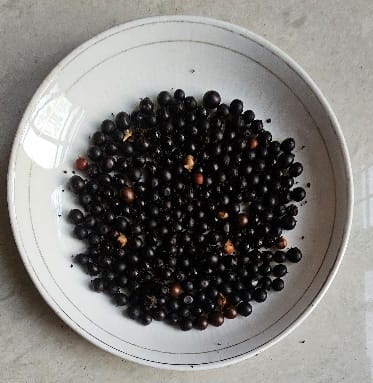
They are also incorporated into traditional toys, rattles, and handicrafts because of their hardness and attractive appearance.

Bracelets and earrings Hari darshan seeds
4. Phytoremediation and Wastewater Treatment
Hari darshan is one of the most widely used macrophytes in constructed wetlands for the treatment of domestic sewage, greywater, municipal wastewater, and certain industrial effluents. Its extensive root system enhances nutrient uptake, pollutant removal, microbial activity, and oxygen transfer, making it an efficient and sustainable species for ecological wastewater treatment 13.
5. Soil Stabilization and Erosion Control
The dense rhizomatous root system binds soil effectively, helping to stabilize slopes, riverbanks, canals, and embankments. Consequently, is planted for erosion control and ecological restoration of degraded sites13.
6. Biomass Production and Bioenergy
The Hari darshan produces abundant biomass, which can be utilized for composting, vermicomposting, mulch production, and biogas generation. Biomass harvested from constructed wetlands can be recycled, contributing to sustainable waste management and circular bioeconomy practices 14.
7. Pollinator Support
The nectar-rich flowers attract bees, butterflies, and other pollinating insects, thereby supporting pollinator diversity and enhancing urban and rural biodiversity 15.
8. Cultural and Religious Significance
In many parts of India, Hari Darshan is planted near homes, temples, and pathways as a symbol of beauty, prosperity, and resilience. Although it was once valued for multiple household utilities, today it is largely cultivated as an ornamental species, illustrating the gradual shift from a subsistence resource to a decorative plant due to the erosion of traditional knowledge 16,17.
References:
1. Tan, S. L., et al. (2020). Nutritional and functional properties of Canna edulis starch: A review. Journal of Food Composition and Analysis, 89, 103463.
2. Gaur, A. (2014). Nutritive value of rhizome of Canna indica Linn. International Journal of Pharma and Bio Sciences, 5(4), 644–648.
3. Zhang, J., Wang, Z.-W., & Shi, X.-M. (2010). Chemical composition and dietary fiber characteristics of Canna edulis. Food Science and Technology International, 16(4), 305–313.
4. Kessler, R. J. (2007). Canna Lilies for Alabama Gardens. Alabama Cooperative Extension System ANR-1315.
5. Yadav, P. K., & Sisdia, S. S. O. (2019). Canna indica L. (Cannaceae): A review on phytochemical, medicinal, pharmacological and biological studies. Journal of Drug Delivery and Therapeutics, 9(1-s), 520–523.
6. Kumar, V., Chopra, A. K., & Pathak, C. (2016). Phytoremediation potential of Canna indica. International Journal of Phytoremediation, 18(2), 123–130.
7. Darsini, A. I. P., Shamshad, S., & Paul, M. J. (2015). Canna indica (L.): a plant with potential healing powers: a review.
8. Karungamye, P. N. (2022). Potential of Canna indica in constructed wetlands for wastewater treatment: A review. Conservation, 2(3), 499-513.
9. Facciola, S. (1990). Cornucopia II: A Source Book of Edible Plants. Kampong Publications.
10. Brickell, C. (2016). RHS A–Z Encyclopedia of Garden Plants. Royal Horticultural Society.
11. Duke, J.A. (2002). Handbook of Medicinal Herbs. CRC Press.
12. National Research Council. (1989). Lost Crops of the Incas. National Academies Press.
13. Brix, H. (1997). Do macrophytes play a role in constructed treatment wetlands? Water Science and Technology, 35, 11–17.
14. Brix, H. (1997). Water Science and Technology, 35, 11–17.
15. Proctor, M., Yeo, P., & Lack, A. (1996). The Natural History of Pollination. HarperCollins.
16. Jain, S.K. (1991). Dictionary of Indian Folk Medicine and Ethnobotany. Deep Publications.
17. Cotton, C.M. (1996). Ethnobotany: Principles and Applications. John Wiley & Sons.