
Family: Fabaceae
Synonyms: Bauhinia alba, Bauhinia candida, Phanera variegata.
Common names: Orchid tree, camel’s foot, mountain ebony.
Local names: Karyale (करयाले), kachnar (कचनार).
Karyale trees can be seen growing all over India upto an elevation of 1700 metres above sea level. Wild growing trees of this plant exist most commonly in semi-deciduous forests, in border area of agricultural fields and village common lands of Western Himalayas.
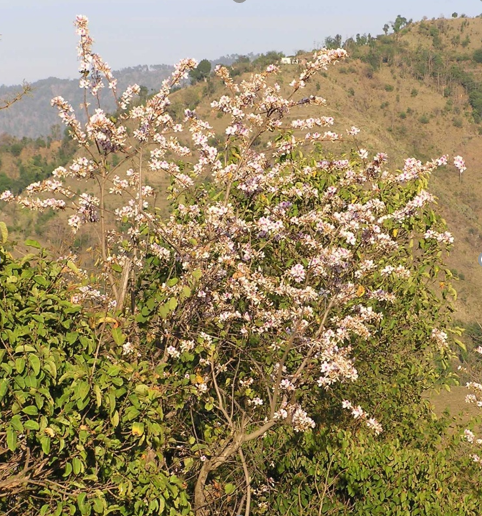
A blooming tree of karyale
It is one of most magnificent flowering trees bearing highly showy flowers and flowering season continuing for four to five weeks. Therefore, karyale trees are also planted along roadsides and parks as flowering ornament.
Karyale is a multipurpose tree. The flowers as well as buds are edible. Its bark is used in Ayurveda as medicine. It is also a valuable fodder plant. Its leaves are fed to cattle. Shoots are lopped during the autumn months and fed to cattle as green fodder. Due to this karyale is one of dominating trees in the agroforestry projects going on in mid-hill region.
New trees of karyale are also raised by Public Works and Horticulture Departments for planting along the roads and other public lands.
Karyale plant:
A perennial medium sized deciduous tree, upto 15 m tall; bark grey with longitudinal cracks, pale pink inside, twigs slender, zigzag; when young, light green, slightly hairy, and angled, becoming brownish grey.
Leaves rather broader than deep, simple, rigidly sub-coriaceous, deeply cordate, 11-15 nerved, divided to about ¼ the way down.
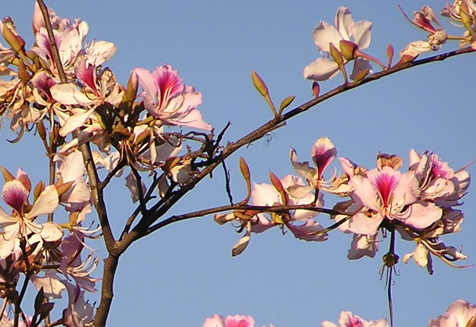
Karyale flowers
Flowers, conspicuous, white with upper petal purplish, 8-12 cm wide, in axillary and terminal, few flowered in corymbo
Fruit a pod,15-20 cm long, flat, hard, glabrous, dehiscent.
Seeds 15-20.
Karyale flowers and flowers buds can be best harvested from late spring to mid- summer season of the year. Although plant shows luxuriant growth in wild habitats naturally or due to planting of Karyale in forests during tree plantation program conducted every year in rainy season. Karyale is also abundant in private land holding but still we need to = harvest these reproductive edible parts of the plant sustainably by habitat rotation or keeping some flowers on parent tree.
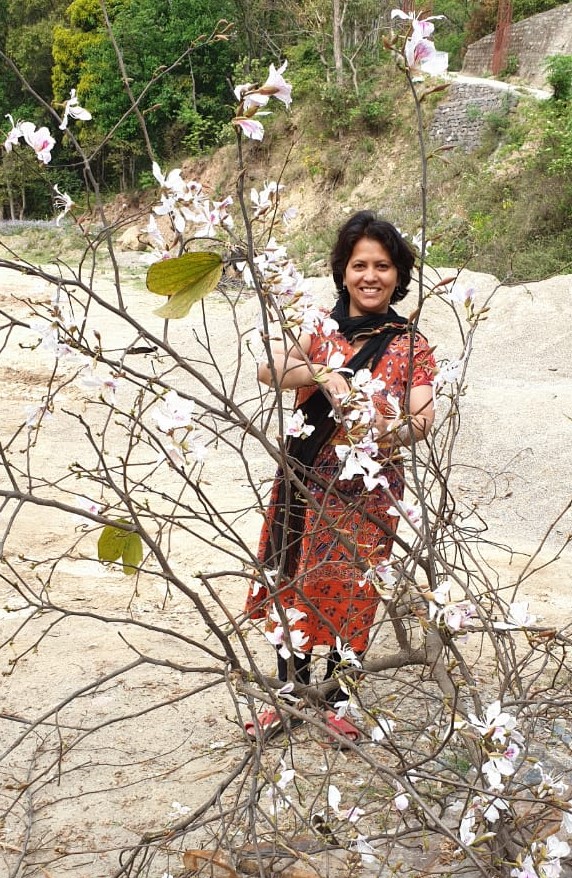
Edible uses:
Flower buds as well as flowers of karyale are edible. These are prepared as a vegetable and also as a snack called kachru (कचरू) in local dialect. The flowers are also used for making rayataa (रायता). A very tasty pickle is also made from flower buds.
Karyale bud’s vegetable:
Ingredients:
Buds, 1 kg; mustard oil 3-4 table spoons; coriander powder, 1 table spoon;
fenugreek seed powder, ½ table spoon; cumin seeds, 1 tea spoon; turmeric
powder, 1 table spoon; red chillies, 2-3; chopped onion, 1; chopped garlic, 4-6
cloves; ginger paste, ½ table spoon; tomato puree, 1 cup or 2 cups curd.
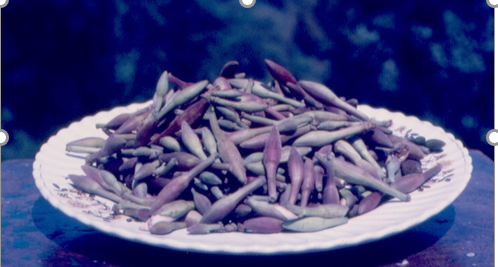
Flower buds of karyale
Method:
Boil the flower buds for 5-10 minutes. Squeeze with hand to drain out excess water. Heat oil in a pan. Add coriander, cumin seeds, chillies, turmeric, onion, ginger, garlic and tomato puree or curd etc in sequence.
Add boiled buds and sauté for 5-10 minutes The vegetable will be ready to serve or buds curry can be prepared by adding two cups of curd and boiling for another 5 to 10 minutes.
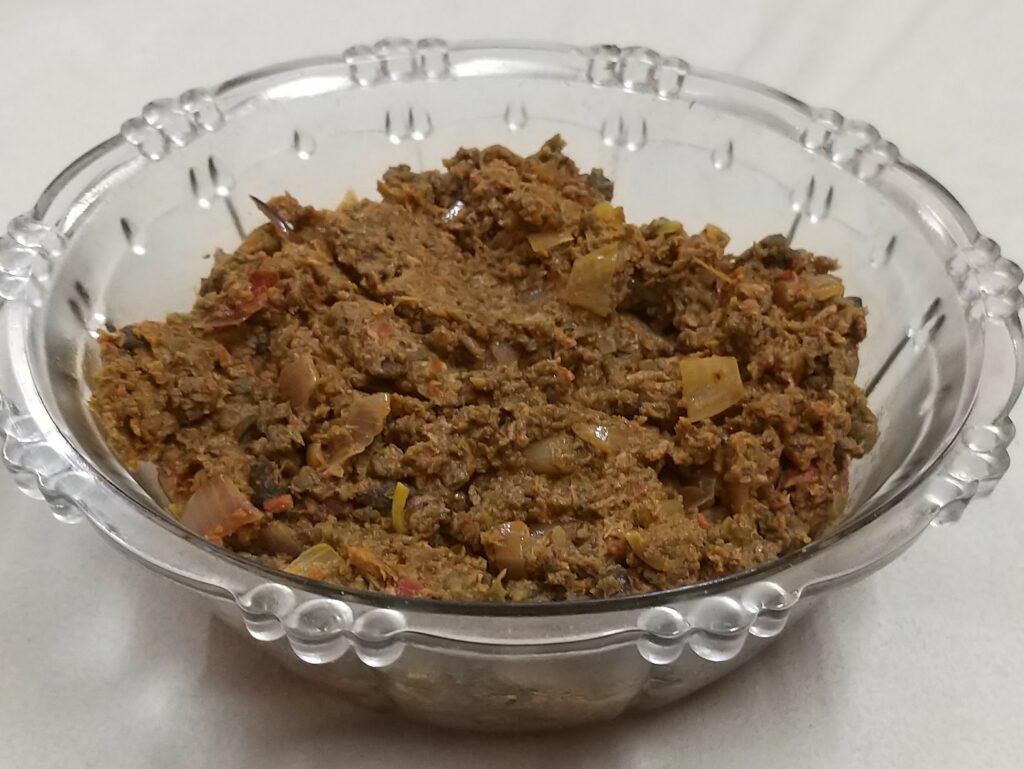
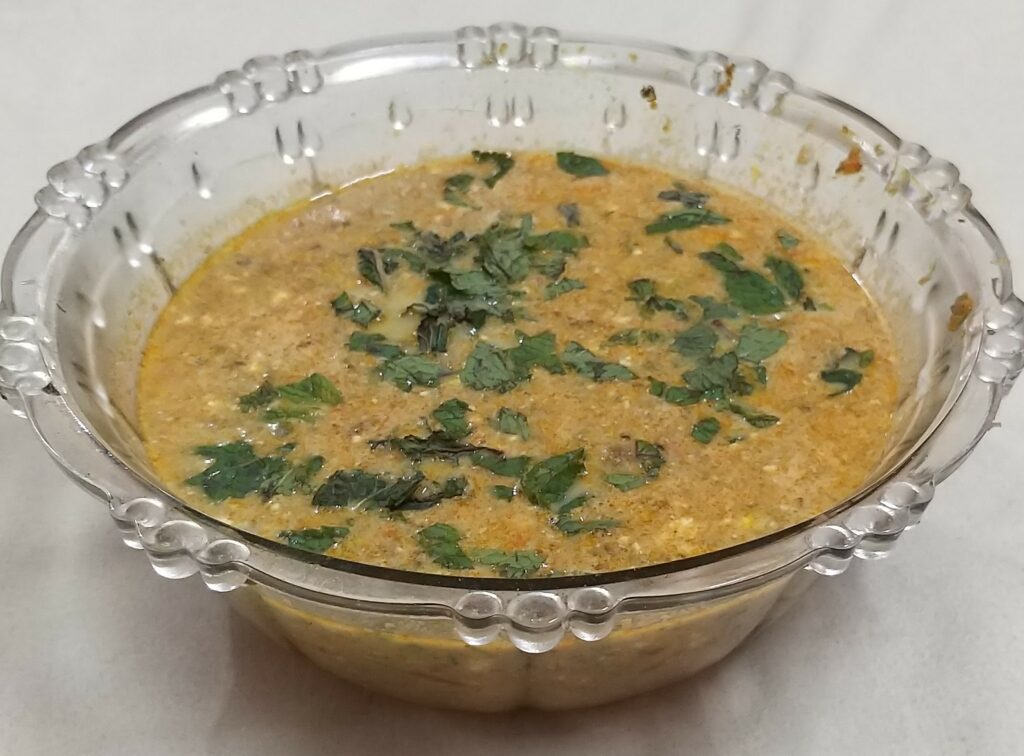
Karyale flower buds vegetable curry ready to serve
Karyale buds’ Pickle
Ingredients:
Buds, 1 kg; mustard oil 1/2 kg; coriander powder, 2-3 table spoon; fenugreek seed powder, 4 table spoon; cumin seeds, 1 tea spoon; turmeric powder, 1 table spoon; red chilies powder,3-4 table spoon; rai powder,6-7 table spoon; salt according to taste.
Method:
Boil Karyale buds till they are soft, then dry in full sunlight for 4-6 hours. Now heat 5-8 table spoon mustard oil in a heating pan and fry dried buds in slow flame for 5 minutes and let them cool down. Now add to this spices listed above and mix well.Place these fried buds in a glass container and add rest of mustard oil and little more salt to it. Store this glass container in dry place or keep in sunlight for 2-3 days. After 15 to 20 days pickle is ready to serve.
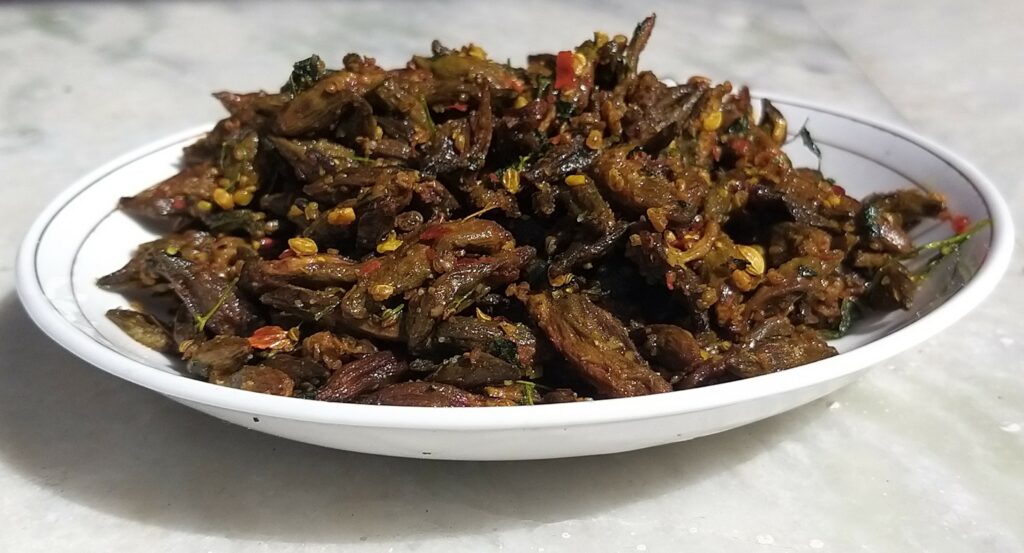
Karyale bud’s Pickle
Fresh flower petals are used for many culinary preparations like rayata, pakoras, kachru and chutney.
Karyale flowers Kachru:
Kachru is prepared by making a paste of flower petal with besan or corn flour and mixing it with spices.
Ingredients:
For preparing 1/2 kg flower Kachru ingredients one will need 1/2 kg besan (black gram flour) or corn flour,1 cup fresh coriander leaves (chopped), 3-5 green chillies, ½ table spoon turmeric powder, 2-3 medium sized chopped onions and salt according to taste.
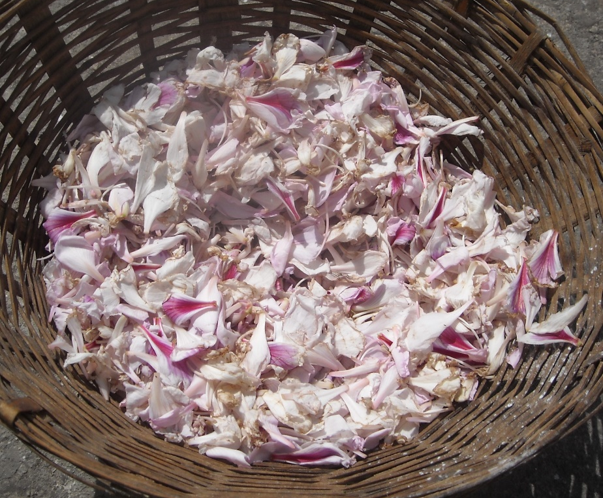
Harvested karyale flowers
Method:
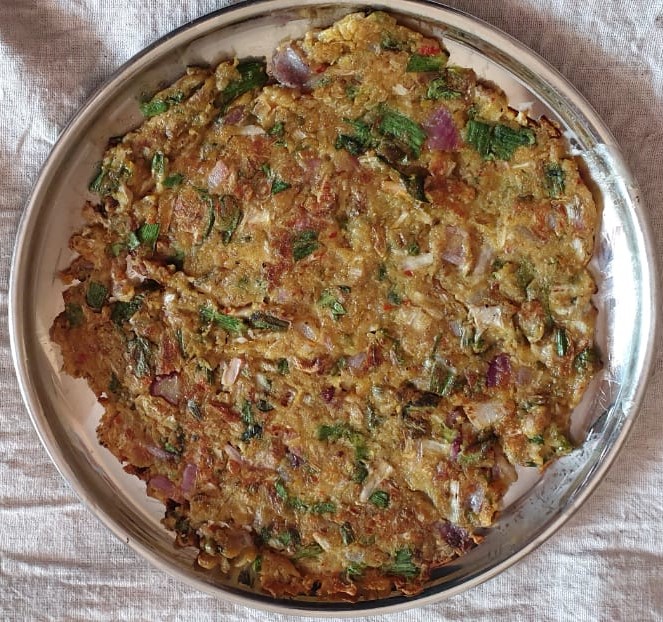
Make a paste of flowers, basen and spices listed above. Mix well. Heat some oil on a flat cooking pan and spread paste on it. Heat for 15-20 minutes occasionally turning it to other side and kachru will be ready. Serve hot with tomato sauce or some other ketchup.
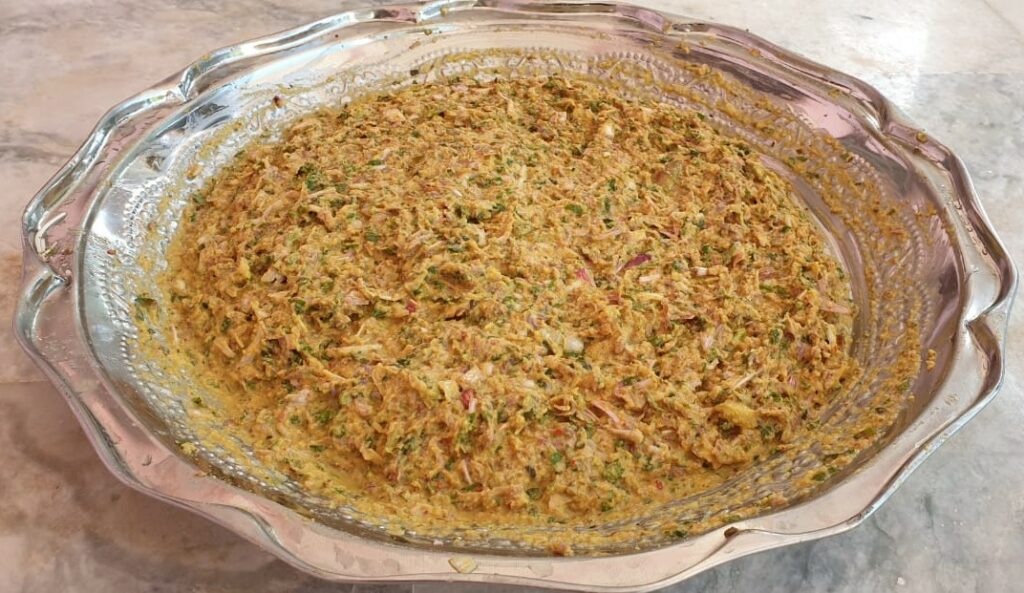
Paste of flower petal with besan and other ingredients
Preparations of karyale flowers are very much liked due to their unique taste. These are also believed to be good for health due to the medicinal properties of karyale plant.
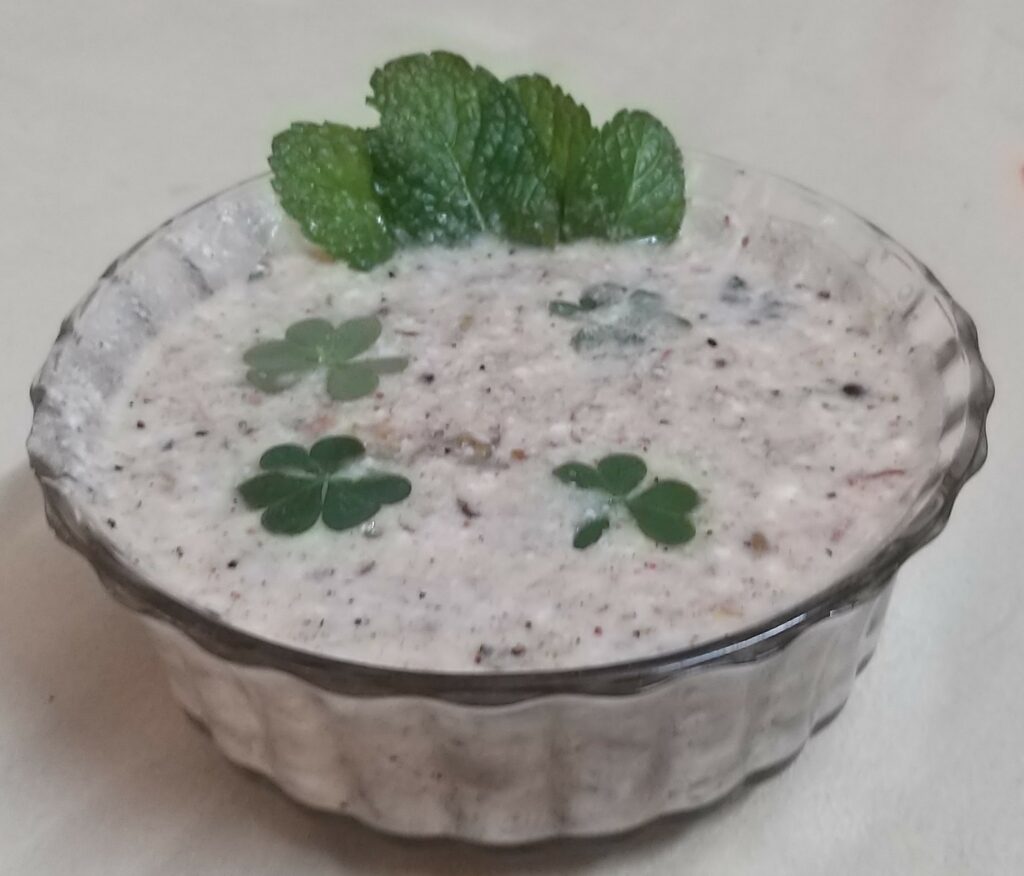
Rayata of Karyale plant flowers:
Ingredients:
1/2 kg Karyale fresh flower, 1 Kg curd, 1 cup fresh coriander leaves (chopped), 3-5 green chillies, a pinch of black pepper powder, 1 table spoon rai powder, 2-3 medium sized chopped onions and salt according to taste.
Method:
Boil and squeeze Karyale flowers. Add these with ingredients listed above into curd or add after shallow frying in hot oil with onion and other spices listed above. Garnish recipe with coriander, Mentha piperta, Oxalis corniculata and Rumex hastata leaves and serve.
Pakoras:
Ingredients:
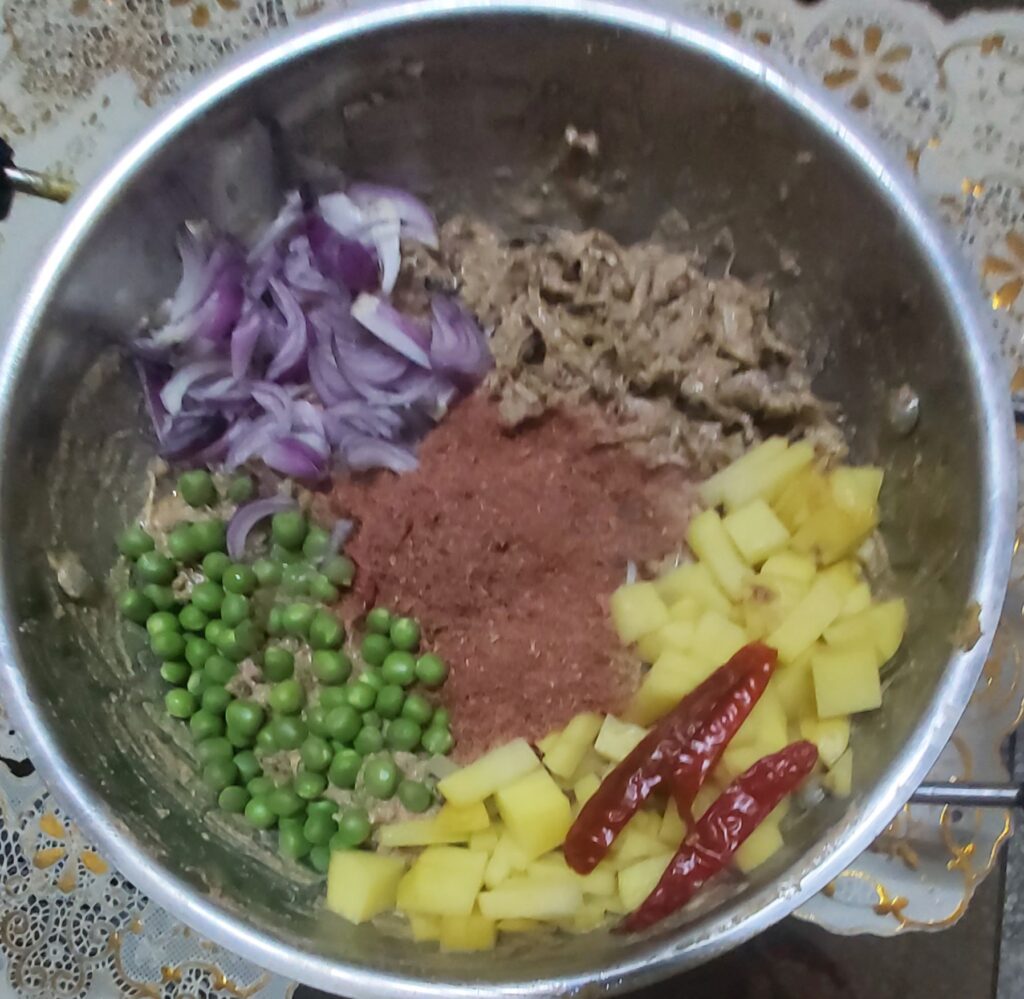
Fresh flower ,1/2 kg; besan (black gram flour) or corn flour,1/2 kg ; 1 cup fresh coriander leaves (chopped), 3-5 green chilies, ½ table spoon turmeric powder, 2-3 medium sized chopped onions, 2-3 medium sized finely chopped potato and salt according to taste.
Method:
Make a paste of flowers, chopped potatoes, basen and spices listed above. Mix well and add some tender chopped leaves of mulberry (Morus alba). Make small ball of this paste and in hot mustard oil give these balls a deep fry.Repeat this process till whole paste is over. Pakoras are now ready to serve. Serve these hot with chutney or tomato-ketchup.
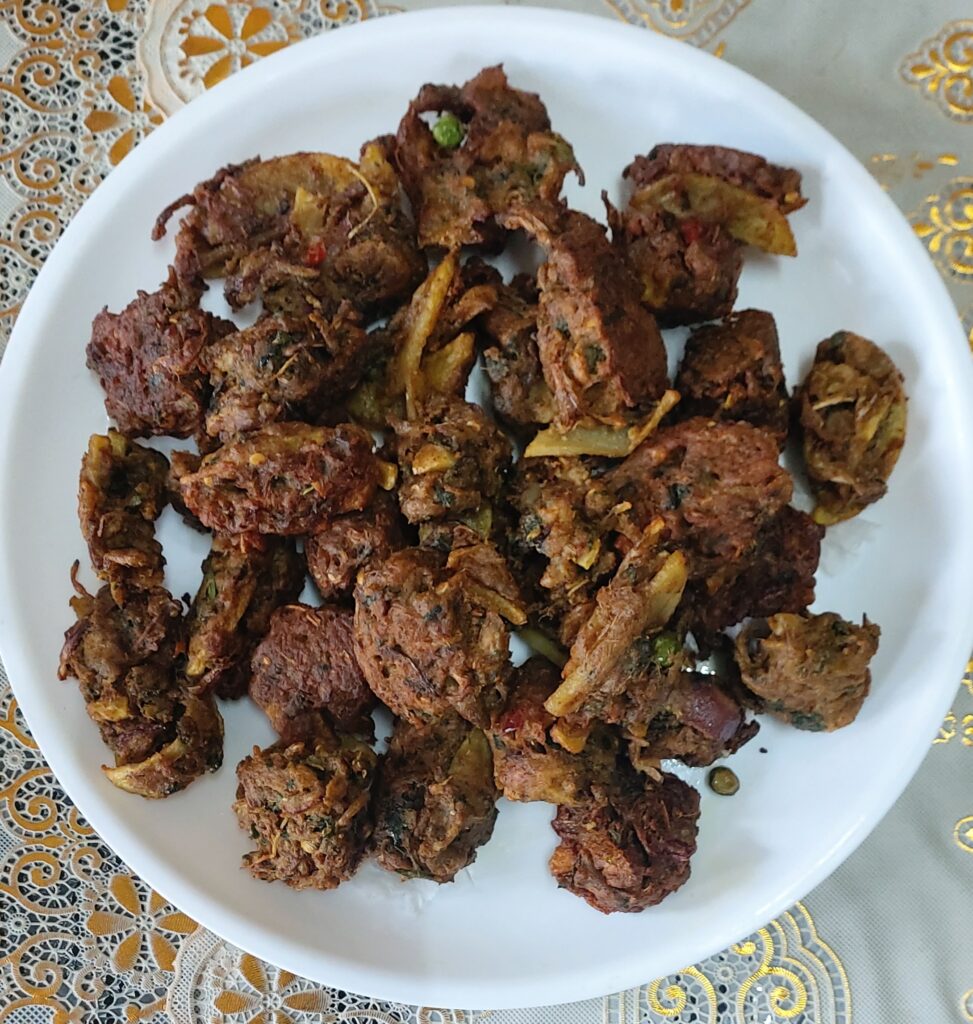
Pakora Curry :
Ingredients:
Karayale pakoras; 250 g mustard oil 3-4 table spoons; coriander powder, 1 table spoon; fenugreek seed powder, ½ table spoon; cumin seeds, 1 tea spoon; turmeric powder, 1 table spoon; red chilies, 2-3; chopped onion, 1; chopped garlic, 4-6 cloves; ginger paste, ½ table spoon; tomato puree, 3 or 5 cups curd.
Method:
Saute curd in hot mustard oil along with spices listed above in same sequence. Add to it karayale pakoras and cook for 8-10 minutes. Now add to it garam masala and garnish with mint or coriander leaves. Karyale pakora curry is now ready to serve, You can serve it with rice or chapattis
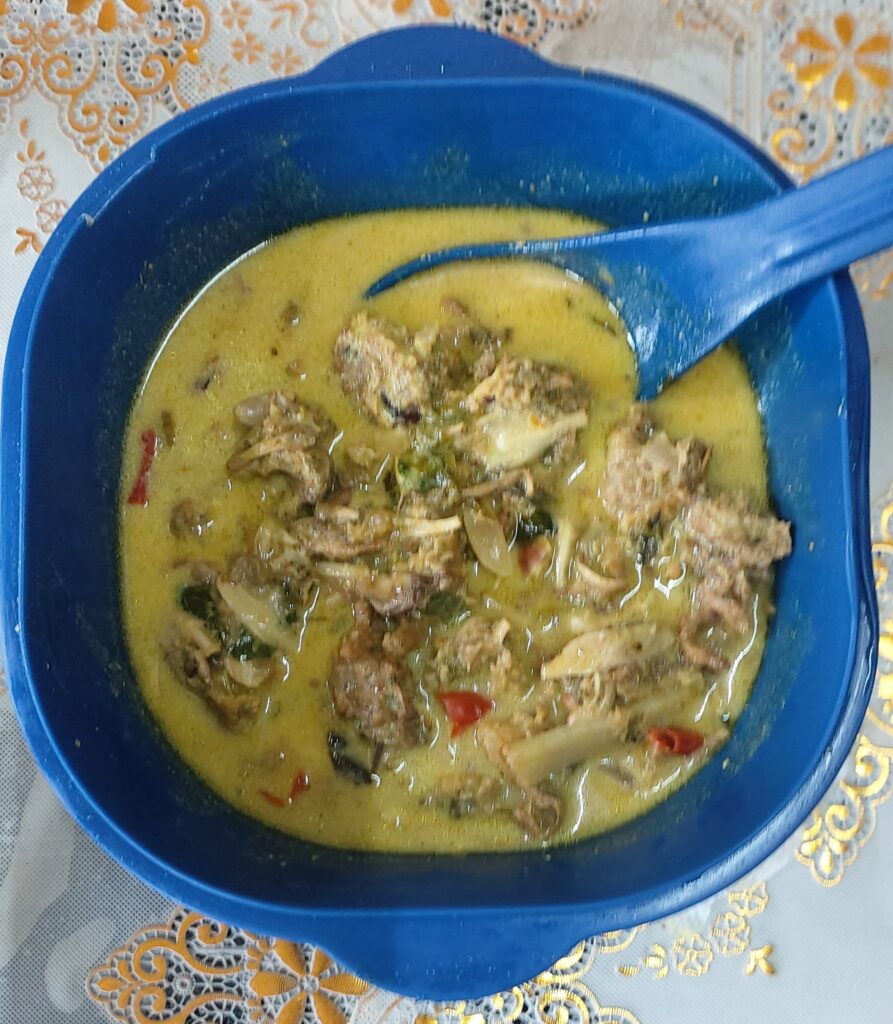
Food value:
According to CSIR’s Wealth of India, the nutrient content of 100 g karyale flower buds is like this; moisture, 78.9 g; protein, 1.8 g; fat, 0.2g; fibre, 1.3; carbohydrates, 17.8; total mineralsas ash, 1.3g; calcium, 70.1 mg; phosphorus, 74.2 mg and iron, 6.1mg. The calorific value of these buds was 54 k cal/100 g1 .
Seek advice from a professional before using this plant medicinally.
Medicinal Uses:
The bark is acrid, sweet; appetising, cooling, astringent to the bowels; cures biliousness, “Kapha”, leukoderma, anal troubles, tuberculous glands, cough, asthma, diseases of the blood, ulcers, vaginal discharges; anthelmintic; used in strangury, thirst, burning sensation.
The root in decoction is given in dyspepsia and flatulency: the flowers with sugar as a gentle laxative; and the bark, flowers, root triturated in rice water as a cataplasm to promote suppuration. The dried buds are used in piles and dysentery. They are considered cool and astringent, and are useful in diarrhaea and worms.
Bark is useful against skin disease and roots are used as antidote to snake poisoning. Dried flower buds are recommended for diarrhoea and vomiting 2 .
The root is prescribed in combination with other drugs for the treatment of snake- bite (Charaka, Sushruta).
Other uses:
As already mentioned,
karyale is a multipurpose tree. Nearly every part of this tree, i.e.root, stem,
leaf, bark, branches and flower has some use or the other. Tree is a good
source of fodder and fuel. During winter season karyale trees are lopped for
fodder. The twigs or branches left after cattle feeding are dried and used as a
fuel.
Karyale source of income:
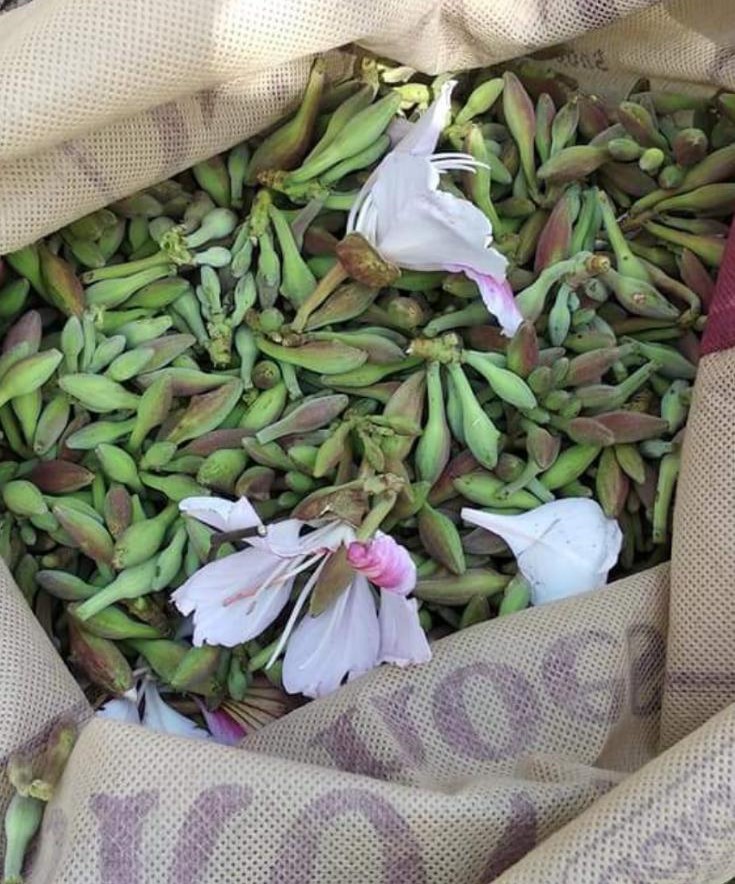
karyale flowers buds harvested for sale
Karyale trees are a good source of income for villagers. As the flowering begins, people harvest first the flower buds and then open flowers. These are then brought to towns for sale. People gladly pay 20-25 rupees depending upon the season, for a paper bag containing 150-200 g karyale buds or flowers. Karyale preparations are considered as a seasonal delicacy and are cooked at least 8-10 times during the two-month long karyale season.
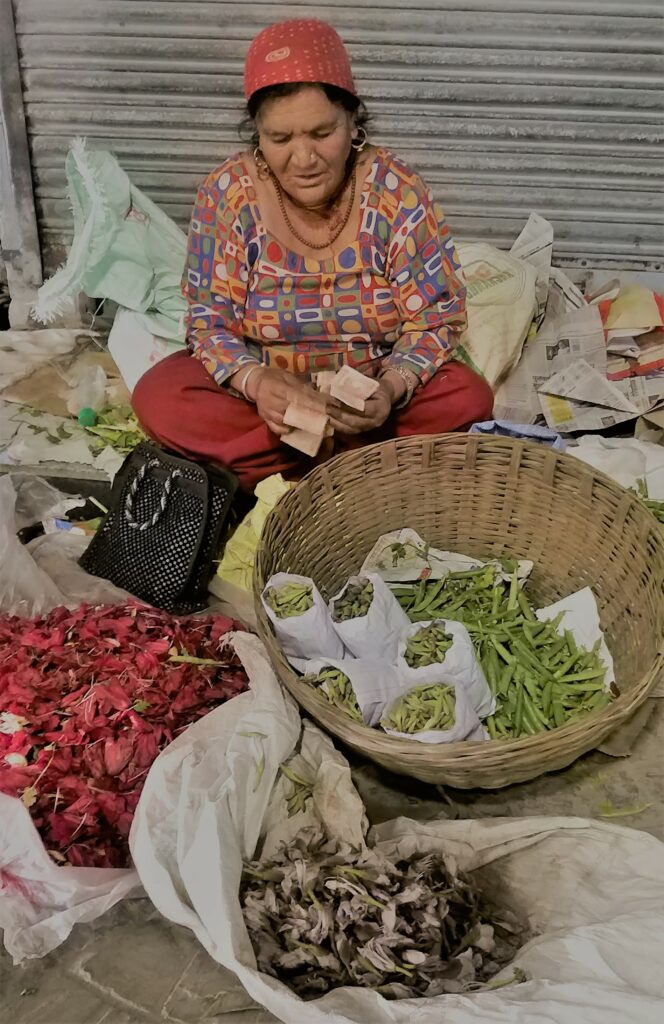
karyale flowers buds and flowers offered for sale in Mandi town of H.P
References::
1, Anonymous, (1988), Wealth of India:Raw Materials, Vol II, CSIR, New Delhi.
2, Kirtikar K.R. and B.D. Basu, (1935), Indian Medicinal Plants, Vols. I, II III and IV, Bishan Singh Mahendra Pal Singh, Dehradun.
Like!! Great article post.Really thank you! Really Cool.
Thanks for the blog post.Thanks Again. Fantastic.
Awesome blog.Really looking forward to read more. Want more.
Im grateful for the blog post.Really looking forward to read more.
Wow, great article post.Really thank you! Will read on…
Wow, great blog.Much thanks again. Want more.
This is one awesome blog article. Want more.
Say, you got a nice blog article.Really thank you! Will read on…
Thank you ever so for you article.Thanks Again. Want more.
A round of applause for your article post.Much thanks again. Really Great.
Thank you for your blog post. Really Cool.
Muchos Gracias for your post.Much thanks again. Great.
I think this is a real great blog post.Thanks Again.
Really enjoyed this blog.Much thanks again. Keep writing.
Very informative blog.Much thanks again. Will read on…
Thank you for your article.Much thanks again. Awesome.
I loved your blog.Thanks Again. Cool.
This is one awesome blog article.Much thanks again. Really Great.
Thanks again for the blog post.Much thanks again. Cool.
Really informative blog.Really thank you! Really Great.
Great blog article. Will read on…
I cannot thank you enough for the article.Much thanks again.
Thank you ever so for you blog article.Much thanks again. Much obliged.
I cannot thank you enough for the blog article.
Thank you ever so for you blog. Great.
A big thank you for your blog post.Thanks Again. Cool.
Great, thanks for sharing this article post. Really Cool.
Great post.Thanks Again. Really Cool.
Great, thanks for sharing this article.Thanks Again. Really Cool.
Very good post. Really Cool.
I really liked your article. Keep writing.
Fantastic article.Really looking forward to read more. Want more.
A round of applause for your blog article.Really looking forward to read more. Much obliged.
Muchos Gracias for your blog article. Really Great.
Appreciate you sharing, great post.Really thank you!
Muchos Gracias for your blog article.Thanks Again. Keep writing.
Muchos Gracias for your article post.
I am so grateful for your article post.Really thank you! Awesome.
I really like and appreciate your article. Keep writing.
Thanks-a-mundo for the article.Really thank you!
Great blog article.Really looking forward to read more. Really Great.
Thanks for the article.Thanks Again. Great.
Great, thanks for sharing this blog post.Really looking forward to read more.
Awesome blog post.Thanks Again. Awesome.
I truly appreciate this article post.Really looking forward to read more. Want more.
I really like and appreciate your article.Really thank you! Cool.
Im obliged for the article post.Much thanks again. Really Great.
Thanks so much for the blog.Thanks Again.
You remind me of my professor back in Kansas. This website has a lot of different options when compared to the other blogs I’ve read. It is really nice to see that you’re still writing great articles still. These pages make me think a lot. On a scale going from 1 to 10. You are a 11.
Thanks so much for the post.Really looking forward to read more. Will read on…
Great blog.Really looking forward to read more. Fantastic.
Thanks so much for the blog.Really looking forward to read more. Really Great.
Major thankies for the blog article.Really thank you! Fantastic.
I really liked your post. Really Cool.
I named my pet parrot after your blog! This could be a lot more important than you might think. Just how did they grow this set of skills? Hello from Kentucky. I am reading your post while camping.
Thank you for your article post.Much thanks again. Will read on…
I enjoyed reading what you had to say. It’s like you wrote the book on it or something. Some nice points there.
You appear to know a lot about this. Thanks for writing this. I enjoyed your post. Thank you.
Thumbs up! Great post! Interesting content. It’s like you wrote the book on it or something.
I truly appreciate this post. You’ve made my day! Thx again. Good job on this article! Thumbs up!
Howdy! I just would like to offer you a big thumbs up for the great information you’ve got here on this post.
I am returning to your website for more soon.
I really liked your blog article.Really looking forward to read more. Really Cool.
Hey, thanks for the article post.Really thank you! Awesome.
I like the helpful info you provide in your articles.
I’ll bookmark your blog and check again here frequently.
I am quite sure I’ll learn many new stuff right here!
Best of luck for the next!
I am so grateful for your article post.Really thank you! Much obliged.
Thumbs up! Nice read. You are a very persuasive writer. You are obviously very knowledgeable.
Im grateful for the blog article.Much thanks again. Really Great.
Thanks for sharing, this is a fantastic blog.
That is a great tip particularly to those fresh to the blogosphere. Simple but very precise info… Many thanks for sharing this one. A must read article!|
Hey, thanks for the blog post. Fantastic.
I was recommended this website by means of my cousin. I’m not sure whether
this publish is written via him as no one else realize
such unique approximately my difficulty. You’re incredible!
Thanks!
Some nice points there. Nice read. Good job on this article! Thanks for writing this.
I enjoyed reading this. I truly appreciate this post. Some nice points there.
Nice read. Your article has proven useful to me. Great read. I truly appreciate this post.
Really appreciate you sharing this blog.Really looking forward to read more. Awesome.
This is one awesome blog.Thanks Again. Want more.
Thanks again for the post.Thanks Again. Cool.
I appreciate you sharing this article post.Much thanks again. Awesome.
Good job on this article! This is an excellent, an eye-opener for sure! I enjoyed reading what you had to say. I really like your article.
I cannot thank you enough for the post.Thanks Again. Really Cool.
I really liked your blog article.Much thanks again. Really Cool.
Thank you for your blog article.Really looking forward to read more.
Really enjoyed this article. Will read on…
Cool feed back. I enjoyed reading what you had to say. I really like your article. It’s like you wrote the book on it or something.
Thanks a lot for the blog post.Really thank you! Great.
Very good blog.Really looking forward to read more. Awesome.
I really liked your blog article.Really thank you! Keep writing.
Wow, great post.Thanks Again. Want more.
I really liked your blog.Really looking forward to read more. Cool.
I really like your article. This sure is a brilliant way of thinking about it. Your article has proven useful to me. I really like your article.
You are obviously very knowledgeable. There sure must be some type of really addictive quality about your article because I can not stay away for more than a day or two without visiting. Great post! Great post!
I loved your blog article.Thanks Again. Great.
Really enjoyed this article.Much thanks again. Really Great.
I really like and appreciate your article.Really looking forward to read more. Cool.
I enjoyed your post. Thank you. Interesting content. You’ve made my day! Thx again. Back when I first arrived to your site I believed I knew a lot about this however now I believe I do not understand what I am talking about.
Very good blog.Thanks Again. Great.
I value the article post.Thanks Again. Want more.
Thanks a lot for the blog.Really thank you! Great.
Great post! I truly appreciate this post. I have been looking everywhere for this! Nice read.
Thank you ever so for you blog article.
You appear to know a lot about this. I have been looking almost everywhere online for this information. Hit me up! Nice read.
Awesome article. Really Great.
This is one awesome blog article.Thanks Again. Fantastic.
I loved your article.Really thank you! Awesome.
Thumbs up! Great insights move fast. Interesting content. I enjoyed your post. Thank you.
I really enjoy the article post.Really looking forward to read more. Really Great.
I really like your article. Thanks for writing this. That is a very great suggestion , especially to people new to the subject. Good job on this article!
You appear to know a lot about this. I enjoyed reading this. I enjoyed reading this. I truly appreciate this post.
Great, thanks for sharing this blog post.Really thank you! Will read on…
I really hope you’re making a lot of money off your information. Good job on this article! You are a very persuasive writer. Nice read.
This is one awesome article.Really thank you! Much obliged.
I really liked your post.Much thanks again. Really Cool.
This information is magnificent. Might you have any video of this? Great post! I enjoyed your post. Thank you.
Thanks for the blog article.Much thanks again.
Thanks-a-mundo for the article post.Much thanks again. Really Cool.
Thanks a lot for the blog.Really thank you! Fantastic.
Fantastic blog post.Really looking forward to read more. Will read on…
Some nice points there. You appear to know a lot about this. Hit me up! My largest threat does not come from new businesses.
Major thanks for the blog article.Really looking forward to read more. Awesome.
Thanks a lot for the article.Really thank you! Cool.
Thank you for your sharing. I am worried that I lack creative ideas. It is your article that makes me full of hope. Thank you. But, I have a question, can you help me? https://www.binance.com/sk/register?ref=WKAGBF7Y
It is appropriate time to make some plans for the longer term and it is time to be happy. I’ve read this put up and if I may just I want to recommend you some attention-grabbing things or suggestions. Perhaps you could write next articles referring to this article. I wish to read more issues about it!
Truly fascinating to read about karyale trees growing across Western Himalayas up to 1700 metres elevation. What makes Bauhinia variegata genuinely special is this rare combination of stunning ornamental flowers alongside practical benefits like edible buds, Ayurvedic bark medicine, and valuable cattle fodder supporting agroforestry communities beautifully.
I really appreciate this detailed post on Himalayan wild food plants. Bauhinia variegata is such an interesting species, especially because of its dual role as both ornamental and edible. The way local names like Karyale and Kachnar are included makes it even more relatable for regional readers.
Kachnar trees deserve far more appreciation than they receive. Those orchid-like blooms appearing every spring are absolutely breathtaking, and knowing the buds are edible alongside their Ayurvedic bark uses makes this species genuinely remarkable among Himalayan agroforestry trees worth preserving.
This is a very informative and well-written article about the karyale tree and its importance. I appreciate how it explains both the botanical details and the practical uses, especially the edible and medicinal benefits. The inclusion of traditional recipes also makes the content more engaging and culturally valuable for readers.
Just wish to say your article is as surprising. The clearness in your post is just excellent and i could assume you’re an expert on this subject. Well with your permission allow me to grab your RSS feed to keep up to date with forthcoming post. Thanks a million and please continue the rewarding work.
Just want to say your article is as surprising. The clarity in your post is simply great and i can assume you’re an expert on this subject. Well with your permission let me to grab your feed to keep up to date with forthcoming post. Thanks a million and please carry on the gratifying work.
Very informative and well-detailed article about Bauhinia variegata (kachnar). It’s great to learn about its ecological importance, nutritional value, medicinal uses, and traditional culinary preparations. The way local knowledge and practical recipes are shared here makes the plant even more interesting and valuable for both cultural and health perspectives.
I really found the section on edible uses of karyale flowers and buds interesting, specially how they are prepared in so many traditional dishes like kachru, raita, and pickles,even the variety of recipes using karyale flowers was very interesting, specially the pakoras and pickles.
I really enjoyed how this article connects the botanical details of kachnar with its practical uses in food, medicine, and rural livelihoods,and the details about its role in agroforestry and local income generation make it even more valuable for readers interested in ethnobotany.
This was a very interesting and detailed post about the karyale (Kachnar) tree,the detailed explanation of its edible uses, nutritional value, and medicinal benefits is very informative,thanks for sharing this useful ethnobotanical knowledge.
I never knew Bauhinia variegata (kachnar) had so many edible uses beyond just being an ornamental tree. The way the flower buds are used in curries, pakoras, and even pickles is quite interesting, especially since it grows so commonly in hilly regions. I do feel the medicinal section is a bit overwhelming and would benefit from a simpler summary, because it’s hard to separate traditional claims from practical uses.
A very informative article about karyale and its many uses,it is wonderful to learn how a single tree can provide nutritious flowers, fodder, ecological benefits, and livelihood opportunities for local communities.Thanks for sharing this valuable knowledge about an important native plant.
This is a wonderful and highly informative article about Bauhinia variegata (Kachnar/Karyale). It beautifully highlights the ecological, nutritional, cultural, and medicinal importance of this amazing tree. The detailed information about traditional recipes, sustainable harvesting, and local uses helps preserve valuable indigenous knowledge. It is inspiring to see how one plant can support biodiversity, rural livelihoods, traditional cuisine, and healthcare practices.
The karyale tree is a remarkable example of nature’s generosity. With its stunning flowers, edible buds, medicinal bark, and nutritious fodder for livestock, it serves multiple purposes while adding beauty to landscapes, making it an excellent choice for agroforestry and environmental conservation.
This is actually the first time I’ve learned about a plant like this; it’s called Kachnar. It has so many benefits. I found out about it through this blog—thank you so much.
This is actually the first time I’ve learned that a plant like this exists. It has so many benefits and is used to make so many things. I found this out through this blog—thank you so much.
I learned from this blog that such a plant exists; it has so many benefits and is used to make so many things. Thank you—I found this out thanks to this blog. Thank you so much.
Karyale is a fascinating example of how nature provides food, medicine, and ecological benefits together. Learning about its edible flowers, traditional recipes, and cultural importance highlights the value of preserving native plants. Sustainable harvesting can help protect this valuable resource for future generations.
This article beautifully highlights the cultural, nutritional, and environmental importance of the karyale tree. Learning about its traditional recipes, medicinal uses, and role in local livelihoods shows how valuable native plants can be. Preserving such natural resources is essential for future generations.
Karyale trees are an important part of India’s natural vegetation, thriving in various regions up to 1700 metres elevation. Their presence in forests, agricultural borders, and village lands highlights their ecological value and adaptability to diverse environments, especially in the Western Himalayas.
This is a fascinating and highly informative article about Bauhinia variegata (Karyale/Kachnar). It beautifully highlights the ecological, nutritional, cultural, and medicinal importance of this remarkable tree. The detailed descriptions of its traditional culinary uses, especially the recipes for kachru, pickles, and other preparations, provide valuable insight into local food traditions. It is wonderful to see indigenous knowledge and sustainable use of native plants being documented and shared. A great resource for anyone interested in biodiversity, traditional cuisine, and herbal heritage.
This article beautifully highlights the cultural, nutritional, and medicinal importance of the Karyale tree. It is fascinating to see how one plant supports food traditions, local livelihoods, animal care, and biodiversity. Preserving such valuable native plants can help protect both ecological balance and traditional knowledge for future generations.
Reading about the origin of the first nativity scene offers a beautiful reminder of the true meaning of Christmas. This inspiring story of Saint Francis of Assisi highlights faith, humility, and devotion, encouraging readers to reflect on the birth of Christ and the timeless tradition of the Christmas manger.
I never knew that Kachnar flowers and buds had such an important role in traditional cuisine and local practices,here wild edible plants and their connection with local food traditions is truly inspiring.Thanks for sharing!
Amazing to learn how a beautiful tree like Kachnar can be part of traditional cuisine and local heritage,i never knew that Kachnar had so many uses beyond being a beautiful flowering tree!
This is a very informative article about Bauhinia variegata (Kachnar/Karyale) and its traditional uses. It beautifully explains the plant’s importance, edible flowers, medicinal value, and sustainable harvesting practices. The detailed recipes also help preserve local culinary knowledge and cultural heritage.
This is a fascinating and highly informative article about Bauhinia variegata (Karyale/Kachnar), highlighting its remarkable importance in ecology, traditional medicine, nutrition, and local culture. It is wonderful to learn how a single tree can provide food, fodder, medicinal benefits, and support rural livelihoods. The detailed recipes and sustainable harvesting advice also show the deep connection between biodiversity and traditional knowledge. Articles like this play an important role in preserving awareness about valuable native plants and encouraging their responsible use and conservation.
Karyale is a fascinating example of nature’s connection with food, medicine, and local traditions. This multipurpose tree supports biodiversity, provides nutritious seasonal dishes, and benefits rural communities. Preserving such native plants through sustainable harvesting is essential for protecting cultural heritage and ecological balance.
Karyale is an impressive multipurpose tree that combines natural beauty with practical value. Its vibrant flowers enhance landscapes, while its edible buds, medicinal bark, and nutritious leaves make it an important resource for traditional medicine, livestock feeding, and sustainable agroforestry in hilly regions.
I really enjoyed reading this informative article about Bauhinia variegata and its remarkable importance in traditional life. The explanation of kachnar’s edible flowers, medicinal applications, and environmental role provides valuable knowledge about this unique plant and the benefits of preserving natural resources.
I had never heard of the Karyale tree before, so this was really interesting to read. I love how it’s not only beautiful but also useful for food, medicine, and fodder. The traditional recipes shared here make me want to learn more about regional Indian cuisine.
Karyale flowers and buds are valuable edible resources that require careful harvesting practices. Sustainable collection methods like habitat rotation and leaving some flowers on parent trees help protect plant reproduction, maintain biodiversity, and ensure availability of these natural resources for future generations.