
Family: Fabaceae
Synonyms: Indigofera cavaleriei.
Common Name: Deep-Purple Indigo
Local Name: Kathi (काथी)
Shrubs of kathi can be seen growing from 300 to 1900 metres above mean sea level. This plant grows as scrub, mostly on mountains, sparse forests, grasslands near trail sides or streams. The growth of this plant is the best when it is in sunny locations. Though it can succeed even on drier and poorer soils, yet the best performance is on well drained moist soils.
Kathi has quite attractive flowers and landscape architects often suggest it to be used for landscaping. But still its cultivation has not been started yet. Only sample plants can be seen in botanical collections.
It flowers during the months of August and September depending upon elevation. It is the flowers of kathi which are used as food. The flowers are brought from wild plants only.
Besides food, kathi flowers are also used in traditional medicine.
Kathi Plant:
Shrubs or small trees, 1.5-5 m
tall; stems brown, terete, with round lenticels; young branches green, angular,
with appressed white or brown medifixed symmetrically.
Stipules lanceolate-subulate, 3-5
mm, caduceus; leaves ca. 2.4 cm,
(7-)11-19(or 21)-foliolate; petiole and rachis with appressed white and brown
medifixed trichomes; petioles 2.5-3.5 cm; rachis flattened or adaxially
slightly grooved; stipels subulate, as long as petiolules; petiolules 1.5-2.5
mm; leaflet blades opposite, ovate to elliptic, 1.5-6.5(-8) × 1-2.5 cm,
membranous, both surfaces with appressed medifixed trichomes or adaxially
glabrous, midvein abaxially prominent and adaxially impressed, secondary veins
8-10 on each side of midvein, base broadly cuneate to rounded, apex obtuse,
emarginate, or acute and mucronate. Racemes 8-15(-28) cm; peduncle and rachis
with sparse appressed medifixed trichomes; peduncle 1.5-2.5 cm; bracts ovate to
ovate-lanceolate, 2.5-3.5(-5) mm, abaxially with appressed brown trichomes.
Pedicel ca. 1.5 mm; calyx ca. 2.5 mm, with dense appressed grayish brown medifixed trichomes; teeth triangular, ca. 0.5 mm; corolla dark purple, standard elliptic, 7-8.5 × 4.5-5.5 mm, glabrous; wings 7-8 mm, margin apically ciliate; keel 7.5-8.5 mm, outside apically hairy, margin ciliate; stamens 6-7 mm; anthers globose, base with a few trichomes; Ovary glabrous, with 6-9 ovules.
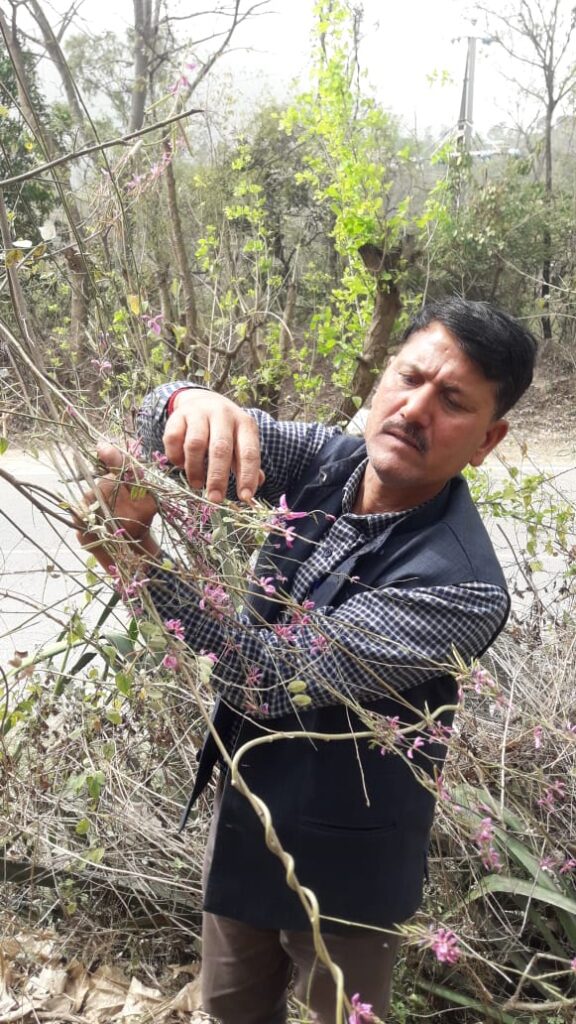
Legume cylindric, 2.5-5 cm, with sparse appressed trichomes when young, glabrescent when mature, sutures thickened; endocarp not blotched.
Seeds 6-9 per legume, rufous brown, cubic, ca. 1.8 × 1.5 mm.
Kathi plant can provide flowers from early spring to early summers.
Edible Uses:
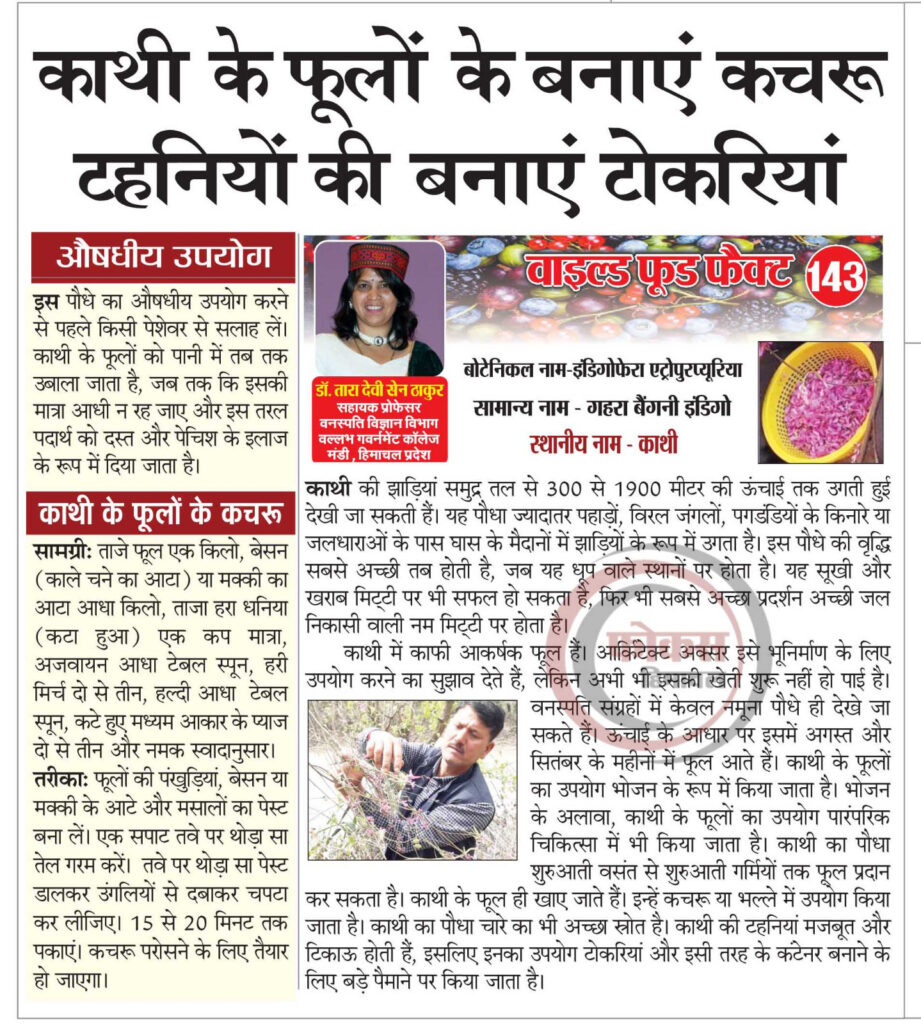
Only flowers of kathi are eaten. These are made into kachru (कचरु) or bhalle (भल्ले), local preparations usually eaten as a snack.These can be prepared as under:
Ingredients:
Fresh flowers, 1kg; besan (black gram flour) or corn flour, 1/2 kg; fresh coriander leaves (chopped), 1 cup amount; caraway (अजवायन), 1/2 table spoon; green chillies, 2-3; turmeric powder, ½ table spoon; chopped medium sized onions, 2-3 and salt according to taste.
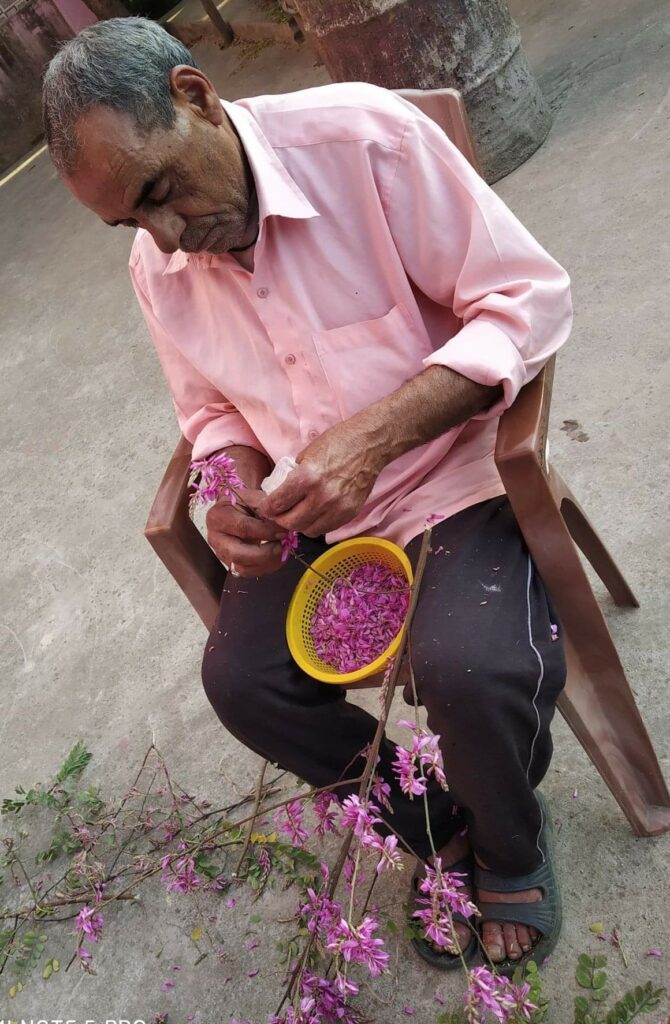
Method:
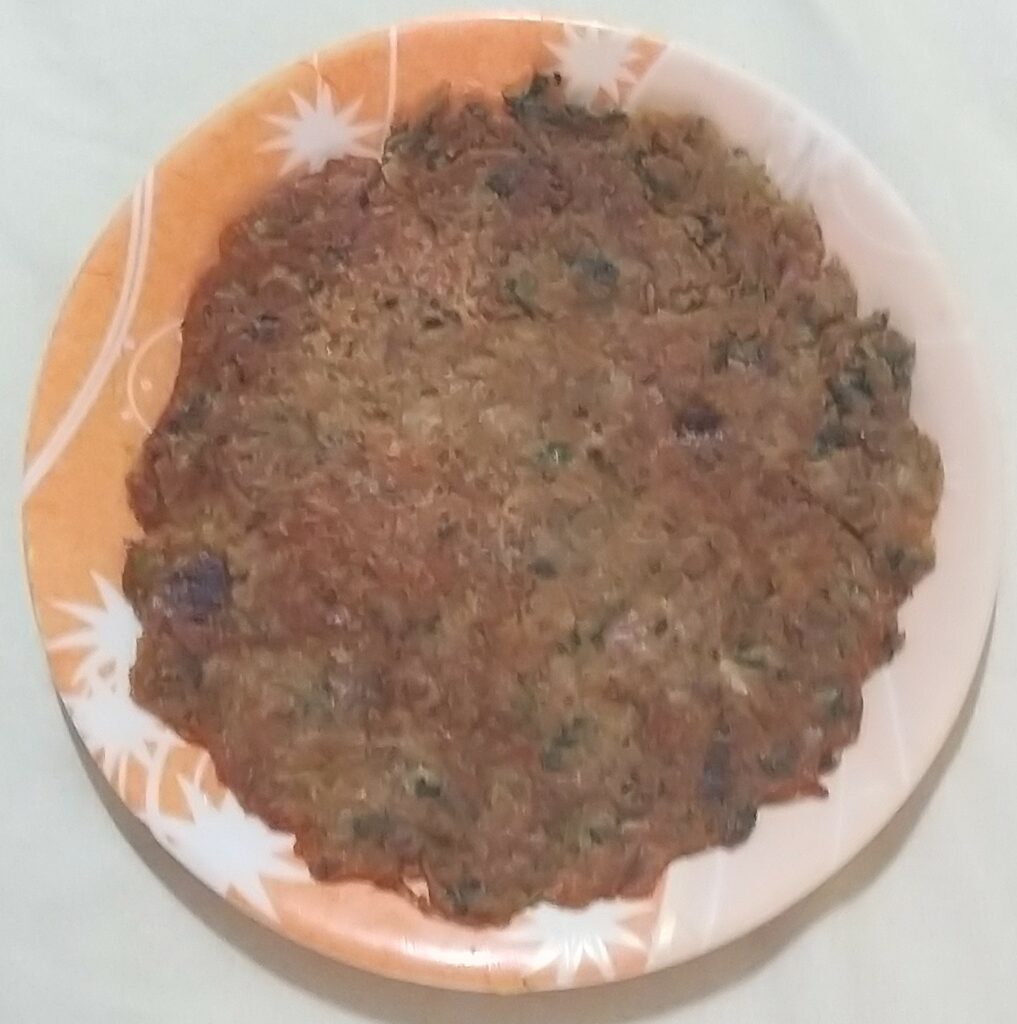
Make a paste of flower petals, besan or corn flour and spices. Heat some oil on a flat heating pan. Put some paste over a pan and make it flat by pressing with fingers. Cook for 15 to 20 minutes. Kachru will be ready to serve. Repeat this process for rest of the paste.
Seek advice from a professional before using this plant medicinally.
Medicinal uses:
It is also used as medicine. Kathi flowers are boiled in water until reduced to half the volume and this liquid is given as a treatment for diarhoea and dysentery.
Other uses:
Kathi plant is reported to have symbiotic relationship with certain types of soil bacteria. These bacteria form nodules on the roots and fix atmospheric nitrogen. Some of this nitrogen is utilized by the growing plant but some can also be used by other plants growing nearby. Kathi plant is also a good source of fodder.
Kathi twigs are strong and durable. So these are used extensively for making baskets and similar containers.
Hi to every , as I am in fact eager of reading this webpage’s post to be updated regularly.
It consists of good data.
Hi there, I enjoy reading through your article post.
I like to write a little comment to support you.
Genuinely when someone doesn’t know then its up to other users
that they will assist, so here it takes place.
Really enjoyed this blog article. Keep writing.
Appreciate you sharing, great blog.Much thanks again. Really Great.
Im grateful for the article.Really looking forward to read more. Want more.
Say, you got a nice article post.Really thank you! Awesome.
Great, thanks for sharing this blog. Will read on…
I really like and appreciate your article post.Really thank you! Keep writing.
I am so grateful for your blog post.Really looking forward to read more.
Awesome article post.Thanks Again. Want more.
Wow, great blog article.Much thanks again. Keep writing.
Thanks-a-mundo for the blog.Thanks Again. Want more.
A round of applause for your blog. Really Cool.
Major thanks for the blog post. Cool.
Thanks for sharing, this is a fantastic blog article.Really looking forward to read more. Really Cool.
Appreciate you sharing, great blog article.Really thank you! Much obliged.
Thanks again for the article.Really thank you!
I cannot thank you enough for the blog article.Thanks Again. Really Great.
Major thankies for the article.Really looking forward to read more. Really Cool.
Thanks for the blog article. Want more.
Great article.Really thank you!
Great blog post.Much thanks again. Much obliged.
Thanks-a-mundo for the post.Much thanks again. Cool.
I cannot thank you enough for the post.Thanks Again. Really Great.
I really liked your article post.Thanks Again. Awesome.
Thanks so much for the article post.Really thank you! Really Great.
Major thanks for the blog.Thanks Again. Much obliged.
Really appreciate you sharing this post.Much thanks again.
Thanks again for the blog post.Really thank you! Really Cool.
I really like and appreciate your article post.Thanks Again. Great.
Appreciate you sharing, great post.Thanks Again. Keep writing.
Wow, great article.Really looking forward to read more. Want more.
This is one awesome blog article.Much thanks again. Much obliged.
Great article post.Really thank you! Awesome.
Muchos Gracias for your article. Keep writing.
I cannot thank you enough for the post.Thanks Again.
I value the blog post.Really looking forward to read more. Much obliged.
Thanks-a-mundo for the article.Really looking forward to read more. Much obliged.
I am so grateful for your blog post.Really looking forward to read more. Keep writing.
Hey, thanks for the post. Want more.
Thanks-a-mundo for the blog article. Much obliged.
Thanks-a-mundo for the blog.Thanks Again. Great.
Great post. Really Great.
Say, you got a nice blog post.Really looking forward to read more. Really Great.
I cannot thank you enough for the post. Much obliged.
This is one awesome article post. Cool.
Thanks for sharing, this is a fantastic post.Thanks Again. Fantastic.
I appreciate you sharing this blog. Will read on…
I really liked your article.Really thank you! Really Cool.
Looking forward to reading more. Great blog post.Thanks Again. Fantastic.
I love reading through a post that will make men and
women think. Also, thank you for allowing me to
comment!
This is one awesome blog.Really thank you! Keep writing.
Thanks for the blog. Will read on…
I always emailed this weblog post page to all my associates, since
if like to read it afterward my links will too.
I read this post fully concerning the difference of most up-to-date and previous technologies, it’s remarkable article.
This is one awesome post.Thanks Again. Much obliged.
Awesome blog.Much thanks again.
Im thankful for the article post. Fantastic.
Looking forward to reading more. Great blog.Really looking forward to read more.
Appreciate you sharing, great article post.Thanks Again. Great.
Say, you got a nice article post.Thanks Again. Really Great.
wow, awesome post.Really thank you! Want more.
Thumbs up! Your article has proven useful to me. You are a very persuasive writer.
Nice read. It’s like you wrote the book on it or something. I enjoyed reading what you had to say.
A big thank you for your blog post.Thanks Again. Will read on…
each time i used to read smaller posts which also clear their motive, and
that is also happening with this piece of writing
which I am reading at this place.
Major thankies for the article post.Really thank you! Awesome.
Im grateful for the article.Thanks Again. Keep writing.
Muchos Gracias for your blog post. Much obliged.
You really make it seem so easy with your presentation but
I find this topic to be really something which I think I would never understand.
It seems too complex and extremely broad for me. I am looking
forward for your next post, I’ll try to get
the hang of it!
Please let me know if you’re looking for a writer for your blog.
You have some really great articles and I feel I would be
a good asset. If you ever want to take some of the load off, I’d absolutely love to write some content for
your blog in exchange for a link back to mine. Please send me an e-mail if interested.
Thanks!
Fantastic post. Much obliged.
I every time emailed this weblog post page to all my associates, as if like to read it then my friends will too.|
Im thankful for the blog article.Much thanks again. Really Cool.
Nice write up. It’s like you wrote the book on it or something. I truly appreciate this post. I have been looking everywhere for this!
Interesting content. I have been looking everywhere for this! I truly appreciate this post. This information is magnificent.
Muchos Gracias for your blog article.Really thank you! Really Cool.
Hey, thanks for the article post.Really looking forward to read more. Great.
I think this is a real great blog.Thanks Again. Cool.
It’s like you read my thoughts! Thumbs up! It’s like you read my thoughts!
Awesome blog post.Really thank you! Awesome.
Thanks-a-mundo for the blog.Much thanks again. Fantastic.
Say, you got a nice blog.Really thank you! Really Cool.
Major thankies for the article post.Really thank you! Much obliged.
Major thanks for the article post.Really thank you! Really Great.
Really appreciate you sharing this post.Thanks Again. Awesome.
I appreciate you sharing this article.Much thanks again. Really Cool.
Thanks again for the article post.Really looking forward to read more. Fantastic.
I am so grateful for your blog article.Really thank you! Want more.
Looking forward to reading more. Great blog post.Really thank you! Much obliged.
Support the man born of prophecies Cuong Truong a.k.a. King of kings and Lord of lords 777 immortality smart contracts space coffins in space funeral homes.
Im obliged for the blog post.Really thank you! Want more.
Really enjoyed this blog post.Really thank you! Really Great.
You’ve made my day! Thx again. They need to take enough time to get ready. I will bookmark this article. It’s like you wrote the book on it or something.
I really enjoy the blog.Really looking forward to read more. Want more.
A big thank you for your post.Thanks Again. Keep writing.
This information is magnificent. You’ve made my day! Thx again. I have been looking everywhere for this! I have been looking everywhere for this!
Major thanks for the article. Fantastic.
Thank you for your blog article.Really looking forward to read more. Really Cool.
Thanks for sharing, this is a fantastic article post.Much thanks again. Really Great.
Thanks for sharing, this is a fantastic blog post.Thanks Again. Cool.
Major thankies for the post. Really Great.
Thank you ever so for you article.Really looking forward to read more. Will read on…
Great article post.Really looking forward to read more. Much obliged.
bookmarked!!, I love your site!
I really like and appreciate your blog article.Really thank you! Keep writing.
You are an outstanding writer. Thanks for writing this. I enjoyed your post. Thank you. I really appreciate your efforts and I am waiting for your next article.
I really like and appreciate your blog.Thanks Again. Really Great.
I think this is a real great post.Really thank you! Keep writing.
Say, you got a nice article post.Really looking forward to read more. Awesome.
Appreciate you sharing, great blog article.Really thank you! Awesome.
Thanks a lot for the blog article.Much thanks again. Want more.
Im obliged for the blog article. Keep writing.
Wow, great article.Much thanks again. Keep writing.
Some nice points there. You’ve made my day! Thx again. You’ve made my day! Thx again. You appear to know a lot about this.
Thank you for your article post.Much thanks again. Awesome.
Thanks for the post.Thanks Again. Really Great.
A big thank you for your blog post.Thanks Again. Cool.
Say, you got a nice blog post. Great.
Thank you ever so for you blog post.Really looking forward to read more. Much obliged.
You are a very persuasive writer. I could not stop from commenting. I truly appreciate this post. This is an excellent, an eye-opener for sure!
I am so grateful for your article post.Really thank you! Really Great.
Great read. This is a very good tip , especially to those new to the topic. It’s like you read my thoughts! This is an excellent, an eye-opener for sure!
Really informative blog post.Much thanks again. Will read on…
Thanks for the blog.Thanks Again.
Fantastic blog article. Really Cool.
It is about time that we connected . I’d really like to discuss to you about some of the subjects you’ve discussed here. I really like your article. It’s like you read my thoughts! Nice write up.
Howdy! I know this is somewhat off-topic but I had to ask. Does managing a well-established website like yours require a lot of work? I’m brand new to running a blog however I do write in my journal every day. I’d like to start a blog so I can share my personal experience and feelings online. Please let me know if you have any ideas or tips for brand new aspiring blog owners. Thankyou!
https://share.google/cB3VQUTjwBzOwdbnS
Hello I am so glad I found your site, I really found you by error, while I was browsing on Digg for something else, Regardless I am here now and would just like to say thank you for a marvelous post and a all round enjoyable blog (I also love the theme/design), I don’t have time to look over it all at the moment but I have bookmarked it and also added your RSS feeds, so when I have time I will be back to read more, Please do keep up the great work.
https://share.google/jKn7vTylonRmASEQQ
I am so glad I took the time to read through this material. The objective perspective and neat formatting ensure that the main takeaways are immediately clear to the audience now.
free spins no deposit
What I appreciate most here is how pleasant the post is to read while still managing to feel relevant, since the discussion stays fair and interesting without becoming too difficult for readers to follow closely.
купить inmode Forma V
The organized way you outlined everything here makes it incredibly easy to grasp the underlying concepts, and I am definitely going to keep this page open in my browser to reference again later when I need a quick refresher.
BetWay Casino
I will definitely be sharing this link with a few colleagues who are also interested in this area, because your clear explanation really cuts through the noise and delivers exactly what the reader needs to know.
meilleur casino en ligne retrait immediat